Thermal management is critical in the electronics industry because it helps prevent equipment from overheating and malfunctioning. Aluminum radiators are a widely used heat dissipation solution, favored for their durability and efficiency. This paper discusses the durability and efficiency of aluminum radiators, highlighting their role in electronic equipment.
Exceptional Durability
Aluminum is a durable metal with high corrosion resistance and retains its strength even in harsh environments.
Corrosion resistance: Aluminum forms an oxide protective layer in air and water, making it difficult to rust or corrosion. This oxide layer provides a barrier that prevents oxygen from penetrating into the metal, thus improving durability.
Mechanical strength: Aluminum is a light but strong metal with a high strength-to-weight ratio. Aluminum radiators are able to withstand mechanical stress, such as shock and vibration, which is crucial during the transportation and operation of electronic devices.
High temperature resistance: Aluminum has a high melting point, making it able to withstand high temperatures without deformation or damage. This characteristic makes aluminum radiators suitable for high-power electronics, which generate a lot of heat.
Enhanced Efficiency
In addition to durability, aluminum radiators are also known for their excellent heat transfer efficiency.
High thermal conductivity: Aluminum has a high thermal conductivity, which means that it can conduct heat from a heat source quickly and efficiently. This high thermal conductivity allows the aluminum radiator to quickly dissipate the heat generated by the device into the surrounding environment.
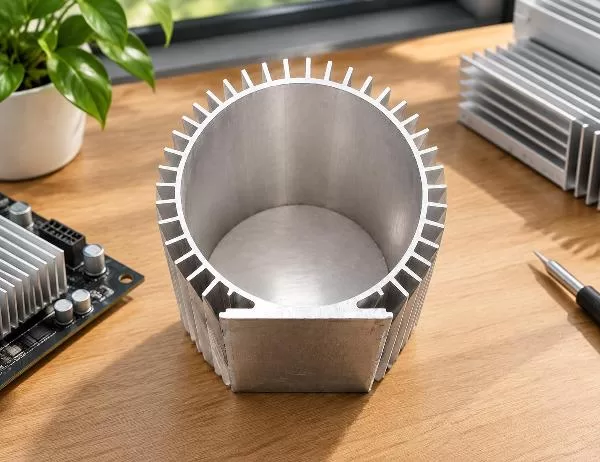
Large surface area: Aluminum radiators are usually designed to have a large surface area with many fins or pins. These fins or pins increase the surface area of the radiator, thereby increasing the amount of heat