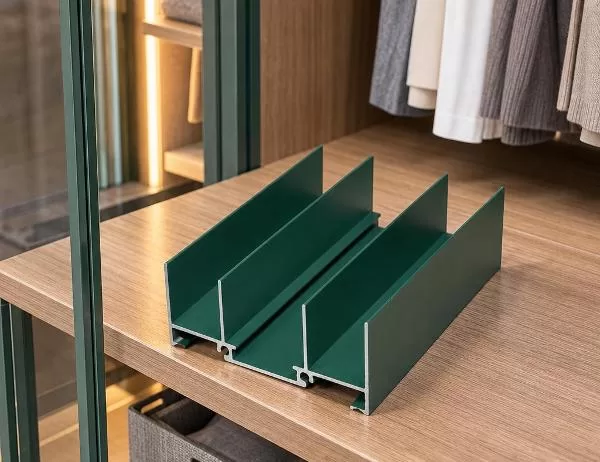
As the construction industry continues to advance rapidly, there have been significant strides in aluminum track profile technology. These advancements have led to improved performance, versatility, and efficiency in various applications. This article will explore the emerging trends shaping the future of aluminum track profile technology.
Future aluminum track profiles will prioritize enhanced strength and durability. This will be achieved through the use of advanced alloys and innovative manufacturing techniques. High-strength alloys, such as 7000-series aluminum, will be employed to withstand heavy loads and resist deformation. In addition, cold-working processes, such as extrusion and roll forming, will increase the material’s strength and hardness.
The demand for lightweight building materials continues to grow, and aluminum track profiles are well-positioned to meet this need. Future profiles will be engineered to be even lighter while maintaining their structural integrity. This will be accomplished through the use of hollow sections, thin-walled designs, and weight-saving optimizations. Lighter profiles reduce material consumption, transportation costs, and installation time.
With increasing emphasis on energy efficiency in buildings, there is a growing focus on improving the thermal performance of fenestration systems. Future aluminum track profiles will incorporate thermal break technology to minimize heat transfer. These thermal breaks, typically made of materials like polyamide or EPDM, are placed between the interior and exterior aluminum components, preventing thermal bridges and reducing heat loss or gain.
Beyond structural performance, future aluminum track profiles will offer enhanced functionality. Integrated features, such as condensation channels, weatherstripping, and noise reduction elements, will be incorporated into the design. These features improve the overall performance of windows, doors, and curtain walls, contributing to weather tightness, sound insulation, and moisture management.
Automation and digitization are transforming the manufacturing and installation processes of aluminum track profiles. Computer-controlled machines will automate cutting, drilling, and assembly operations, ensuring precision, efficiency, and reduced lead times. In addition, digital tools, such as Building Information Modeling (BIM), will facilitate design collaboration, streamline the supply chain, and optimize installation.
Environmental sustainability is a key consideration in the development of aluminum track profiles. Future profiles will prioritize the use of recycled aluminum and employ processes that minimize waste. Sustainable manufacturing practices, such as energy-efficient production and waste reduction, will be adopted to reduce the environmental impact of aluminum track profile production.
The future of aluminum track profile technology holds promising advancements that will continue to redefine the industry. From increased strength and durability to improved functionality and sustainable practices, these trends will drive innovation and enhance the performance of windows, doors, and curtain walls. As the construction industry evolves, aluminum track profiles will play a vital role in shaping the next generation of high-performance and environmentally conscious buildings.