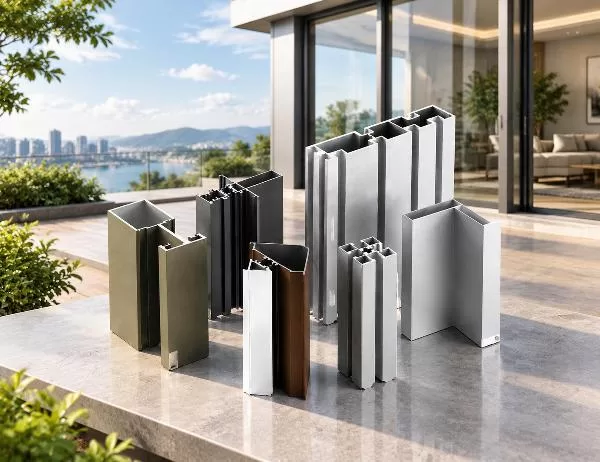
Concrete contractors lose money every time formwork fails, warps, or takes too long to strip. An aluminium formwork system addresses this by replacing timber and steel panels with lightweight, dimensionally stable aluminium components that assemble faster and survive hundreds of reuse cycles. This guide breaks down how these systems work, where they fit, and what separates a reliable setup from one that cracks under repeated job-site stress.
Traditional plywood or steel formwork has a short service life. Plywood delaminates after a dozen pours, and steel panels are heavy enough to slow crew movement on site. Aluminium formwork solves both issues at once by cutting panel weight roughly in half compared to steel, while holding tighter dimensional tolerances across repeated casting cycles.
The practical outcome is fewer labor hours per square meter of poured concrete. A two-person crew can lift and position aluminium panels that would otherwise require three or four workers with steel equivalents. That difference compounds across a mid-rise residential project with dozens of repetitive floor plates.
Faster stripping is the other half of the equation. Aluminium panels release from cured concrete more predictably than timber, which swells and sticks when it absorbs moisture. Projects running on tight pour schedules depend on that predictability to keep the next cycle on track.
Not all aluminium is suited to formwork duty, and this is where a lot of buyers get misled by generic claims. Formwork components typically rely on 6000-series alloys, such as 6061 or 6063, because this family balances strength, extrudability, and corrosion resistance under repeated use.
6063 alloy offers good surface finish and moderate strength, making it common in architectural extrusions. 6061, by contrast, carries higher mechanical strength and is better suited to structural panels that face repeated impact from vibration and compaction equipment. Temper designation matters just as much as alloy family here.
A panel extruded in T6 temper has been heat-treated to achieve high strength for that alloy, which matters when formwork gets dropped, dragged, or stacked on uneven ground. Buyers comparing suppliers should ask for both alloy grade and temper, not just a vague "aluminium" label, since the difference affects how many pour cycles a panel survives before deformation sets in.
A complete system is more than flat panels. It includes a defined set of parts engineered to work together as a repeatable kit rather than custom-cut pieces for each job.
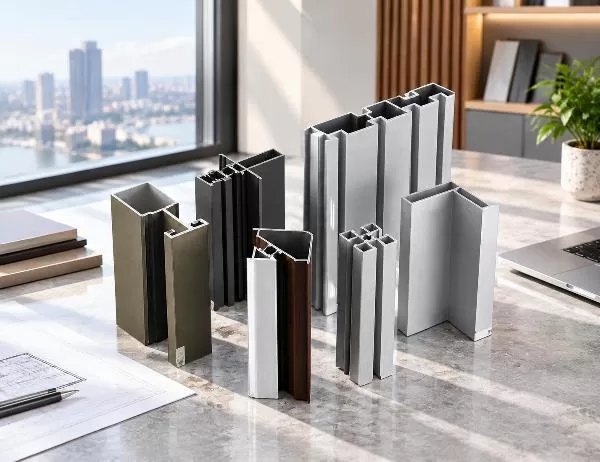
Each of these parts depends on precision extrusion to fit together consistently. Loose tolerances in a single component type can throw off alignment across an entire panel run, which is why extrusion press capacity and quality control at the mill matter more than buyers often assume.
Formwork components demand tighter dimensional consistency than many other aluminium applications, because panels must interlock across dozens or hundreds of repeated units. This is where extrusion equipment capacity becomes relevant to a buyer’s decision, not just a manufacturing detail.
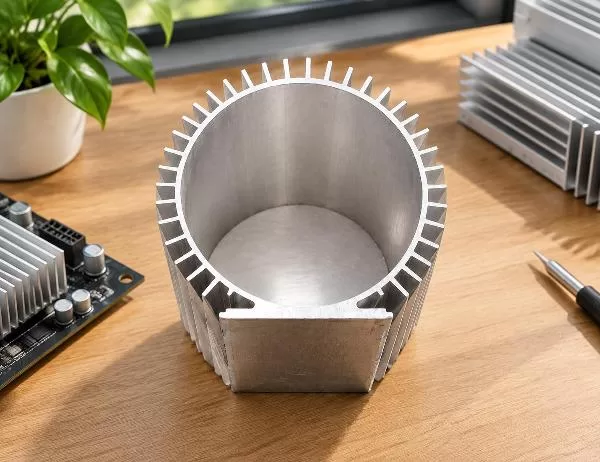
Larger extrusion presses, in the range of 3600 tons, allow for more complex cross-sections to be formed in a single pass, including ribbed or finned profiles that need structural reinforcement built into the shape itself rather than added afterward. Goldapple-Alu produces industrial aluminium extrusions on presses at this capacity, which supports the kind of complex ribbed and structural cross-sections that formwork hardware and reinforcement components often require.
Beyond raw press tonnage, quality inspection throughout production stages determines whether that precision actually reaches the job site. Profiles should be checked against recognized standards, such as the Chinese GB5237 specification or ISO 9001 quality management requirements, at multiple points rather than only at final shipment. Skipping intermediate checks is how dimensional drift creeps into a batch without anyone noticing until panels fail to align on site.
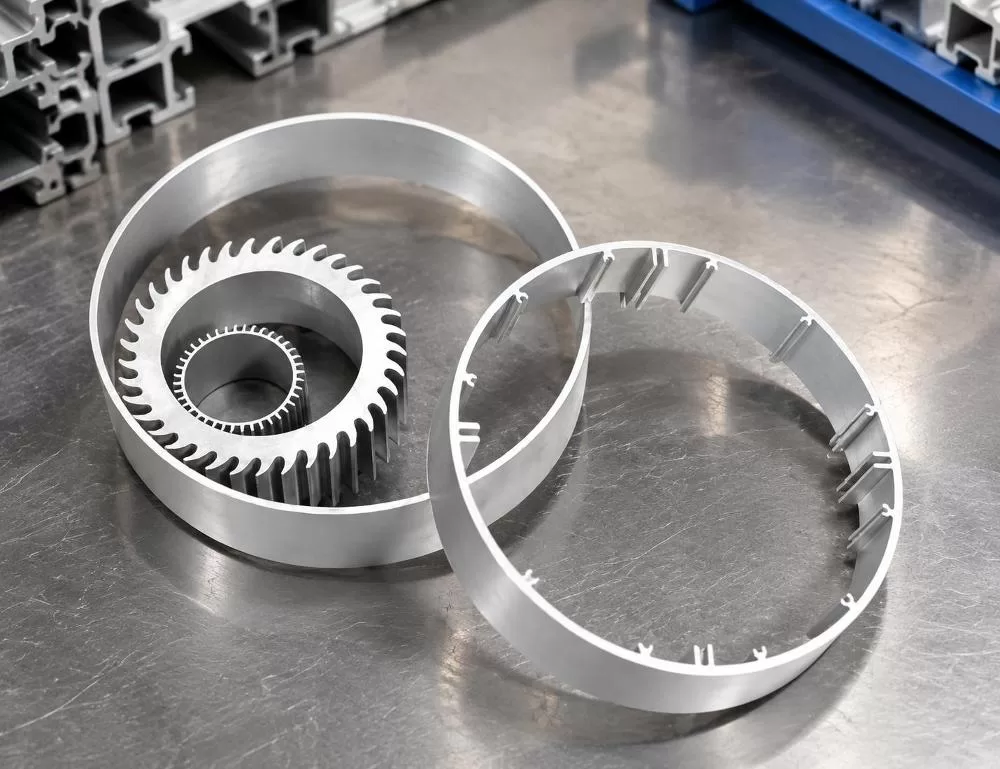
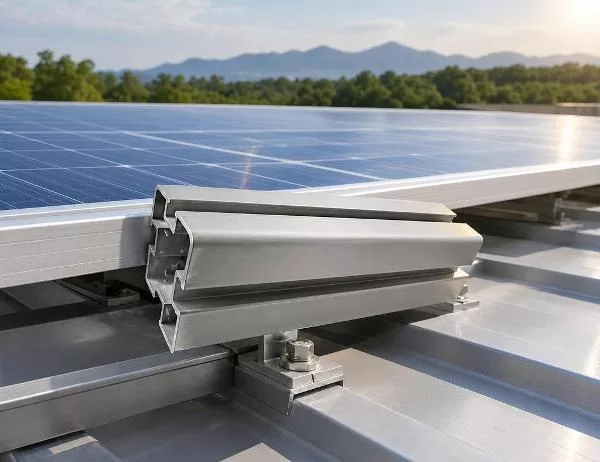
While the structural panels of a formwork system take the heaviest abuse, supporting hardware and brackets often benefit from a surface treatment that resists corrosion and simplifies cleaning between pours. Available finish options for aluminium extrusions in this category typically include anodizing, powder coating, polishing, and sandblasting.
Anodized finishes build an oxide layer into the metal surface itself, which holds up well in humid or coastal job sites where untreated aluminium would oxidize faster. Powder-coated finishes add a durable color layer that also helps crews visually distinguish component types at a glance, a small detail that speeds up assembly when a site is running multiple panel sizes at once.
Sandblasted or mill-finish surfaces, left largely untreated, are common on hardware that gets replaced more frequently anyway, such as wedges and pins that take direct impact from hammering during assembly and strip-out.
| Factor | Aluminium Formwork | Steel Formwork | Timber/Plywood Formwork |
|---|---|---|---|
| Panel weight | Light, manual handling feasible | Heavy, often needs crane assist | Light but weakens over cycles |
| Typical reuse cycles | High, with proper handling | High, but corrosion-prone | Low, degrades after repeated pours |
| Surface finish on concrete | Smooth, consistent | Smooth when new, pits with rust | Variable, grain transfer possible |
| Assembly speed | Fast, modular pin-and-wedge systems | Slower, heavier connections | Moderate, site-cut fitting required |
| Corrosion resistance | Good, especially with anodized or coated finish | Requires ongoing rust treatment | Not applicable, but moisture absorption is an issue |
This comparison is not about declaring one material universally superior. Timber still makes sense for one-off casting shapes that will never be reused. Steel remains common where extreme structural loads exceed what aluminium sections are rated for. Aluminium earns its place specifically in repetitive, modular construction where speed and reuse count matter more than raw load capacity.
Choosing the right specification isn’t a matter of picking the strongest option available. It’s about matching the alloy and temper to the actual stress the component will face across its service life.
Skipping any one of these steps is how projects end up with formwork that looks fine on paper but underperforms in the field once clamping pressure and repeated use start to reveal weak points.
Does aluminium formwork cost more upfront than timber?
Yes, the initial material cost is typically higher. The cost advantage shows up over multiple reuse cycles, where timber needs frequent replacement and aluminium panels continue performing.
Can aluminium formwork be used for curved or irregular structures?
It’s possible with custom extrusion profiles, but aluminium systems are most cost-effective in repetitive, modular layouts like residential floor plates and standardized wall sections, rather than one-off curved forms.
How does extrusion press tonnage affect the final product I receive?
Higher-tonnage presses, such as those rated up to 3600 tons, can form more complex cross-sections in a single extrusion pass, which affects the structural detail available in ribbed or reinforced hardware components.
What minimum order quantities are typical for industrial aluminium extrusion orders?
Order minimums vary by supplier and alloy, but bulk industrial orders often start around 10 tons once sample profiles have been confirmed and approved.
Is anodized or powder-coated finish necessary for structural formwork panels?
It depends on the job site environment. Coastal or high-humidity sites benefit more from anodized or powder-coated protection than dry inland sites, where mill-finish surfaces may be sufficient for shorter-term projects.
Specifying an aluminium formwork system comes down to matching three things: the alloy and temper to your structural load, the extrusion precision to your assembly tolerance, and the surface finish to your site environment. None of these decisions should be made from a brochure claim alone.
Ask suppliers for documented alloy grade, temper designation, and certification records such as ISO 9001 or GB5237 compliance before committing to a bulk order. For us at Goldapple-Alu, supplying 6000-series industrial aluminium extrusions manufactured on presses up to 3600 tons means these specifications are something we document and stand behind, not just advertise. A well-specified aluminium formwork system, backed by verifiable production data, is what keeps repetitive concrete pours on schedule cycle after cycle.