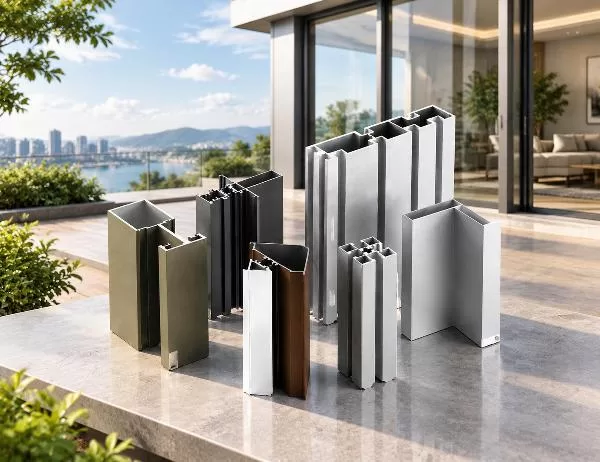
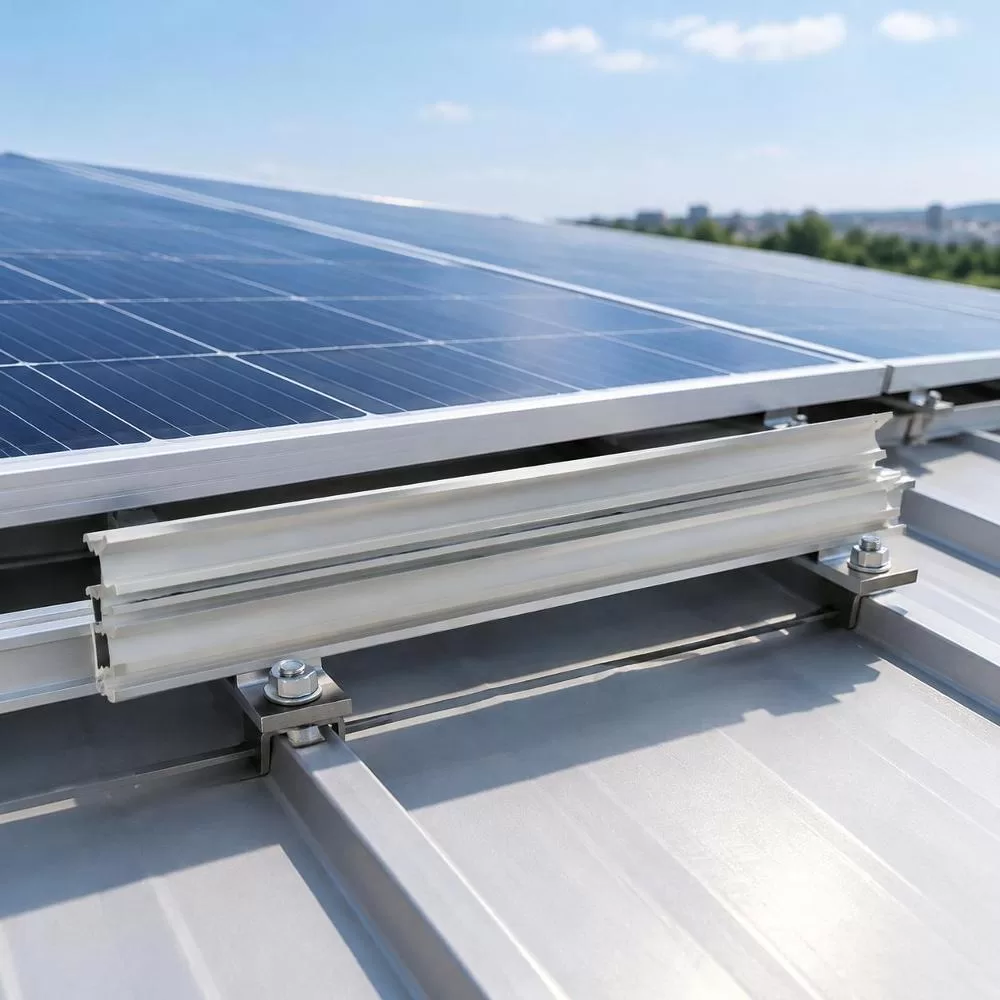
Every solar array lives or dies by what holds it together. An aluminium profile for solar panel mounting isn’t a background detail, it’s the structural backbone deciding whether your installation survives a decade of wind, snow, and salt air or starts loosening bolts within two years. Installers who treat framing as an afterthought often pay for it later in warranty claims.
This matters because panels themselves have gotten remarkably reliable. The weak link has shifted downstream, toward the racking, clamps, and extruded rails that keep modules flat, aligned, and sealed against the elements. Getting the frame right is cheaper than fixing a collapsed array after the first heavy snowfall.
Aluminium dominates solar racking for a simple reason: it balances strength against weight better than steel, and it resists rust without the coatings steel needs. A 6000-series aluminium alloy, the grade most commonly extruded for this purpose, offers a practical mix of tensile strength and workability.
Wall thickness matters just as much as alloy grade. Profiles under 0.7mm tend to flex under load, which sounds minor until you’re staring at a bent rail after a windstorm. Thicker-walled extrusions resist that deformation, which is why reputable frame specifications call out wall thickness over 0.7mm as a baseline, not a premium feature.
According to supplied product specifications, these frames carry an expected service life beyond 25 years, which generally aligns with common panel warranty periods. A frame that corrodes or fatigues faster than the module it supports creates a mismatch that undermines the whole investment. That’s the quiet logic behind pairing panel lifespan with equally durable framing.
Rooftop and ground-mount installations face relentless exposure. Acid rain, ozone, ultraviolet radiation, and airborne pollutants all attack metal surfaces over time, and aluminium isn’t immune without proper surface treatment.
Surface processing addresses this directly. Treatments designed to resist UV degradation and atmospheric pollutants help the frame maintain color and structural luster across its service life, rather than chalking or pitting after a few seasons. This isn’t cosmetic vanity, it’s about preventing microscopic surface damage that eventually invites corrosion.
Snow load and wind resistance follow a related but distinct logic. A frame can be weatherproof against chemical exposure and still fail mechanically if it lacks structural strength. High-strength extruded cross-sections resist bending under heavy snow accumulation and high-velocity wind gusts, which matters enormously for installations in regions with real winters or coastal wind exposure.
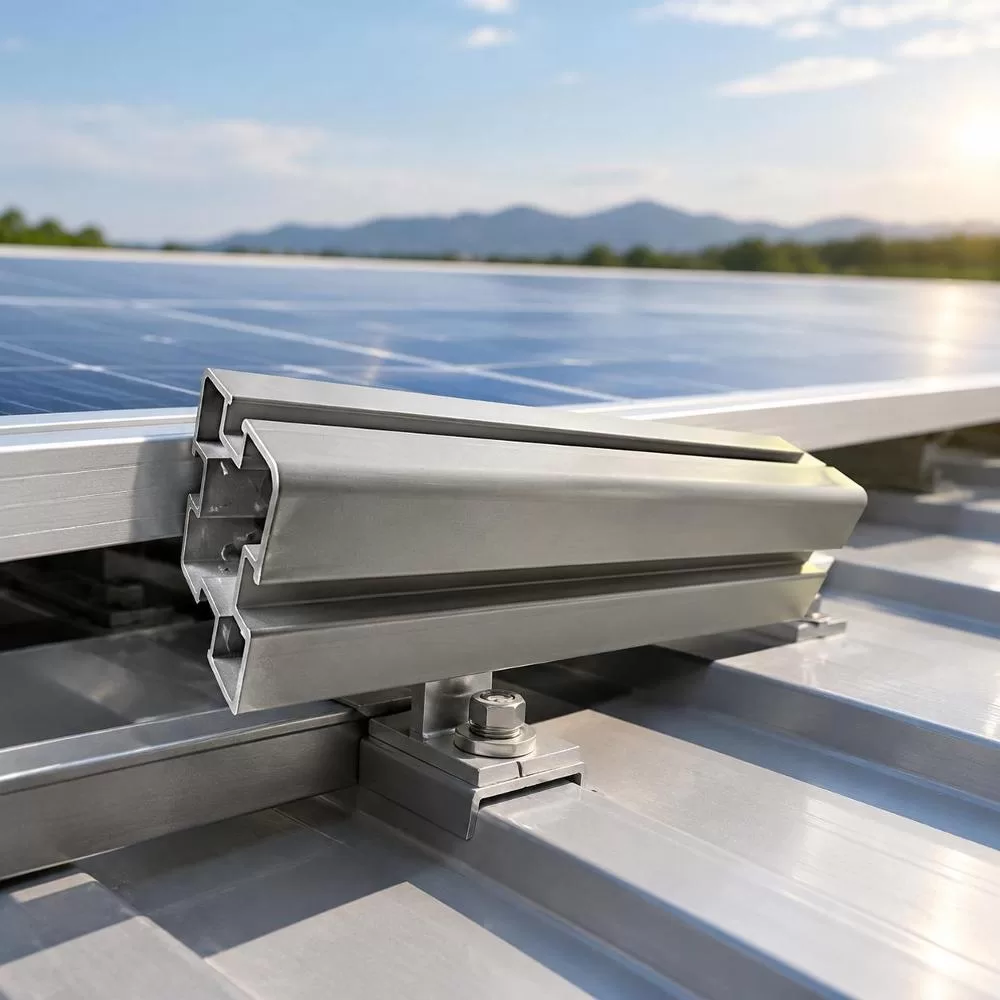
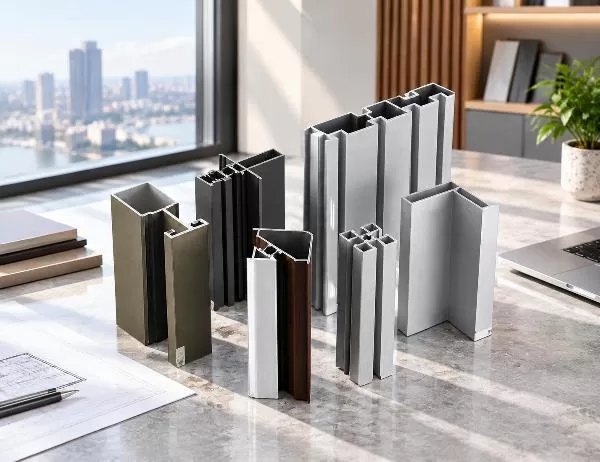
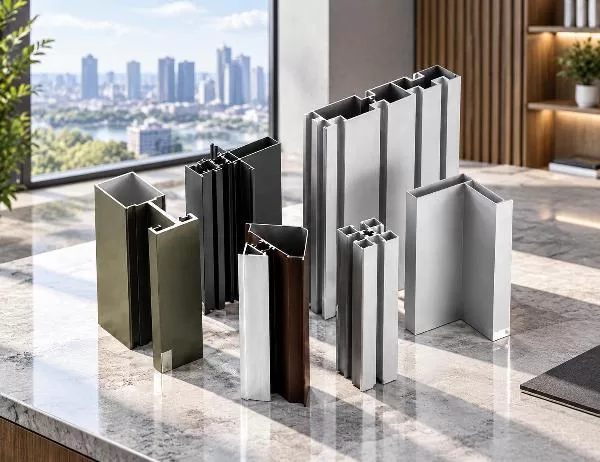
Not every installation needs the same cross-section. Residential rooftops, commercial ground-mount farms, and solar carports each put different mechanical demands on the frame, and extrusion design has evolved to answer that variety.
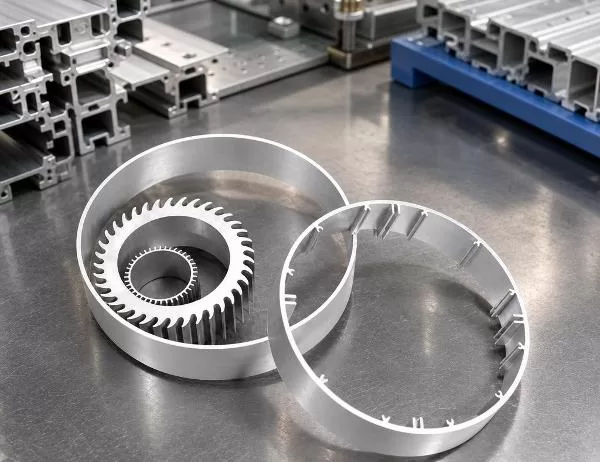
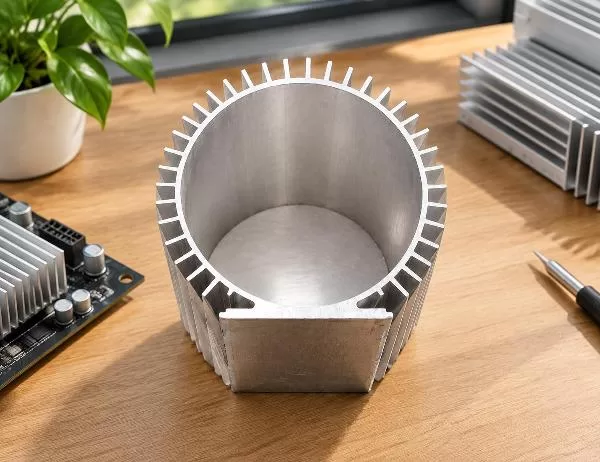
Universal moulds cover most standard panel dimensions, letting installers source one profile type across multiple projects without redesigning hardware each time. For unusual roof geometries, specialized mounting angles, or large-scale solar farms with specific load calculations, custom cross-sections let engineers tune wall thickness, flange angles, and groove placement to the exact application.
Consider these common scenarios when selecting a profile type:
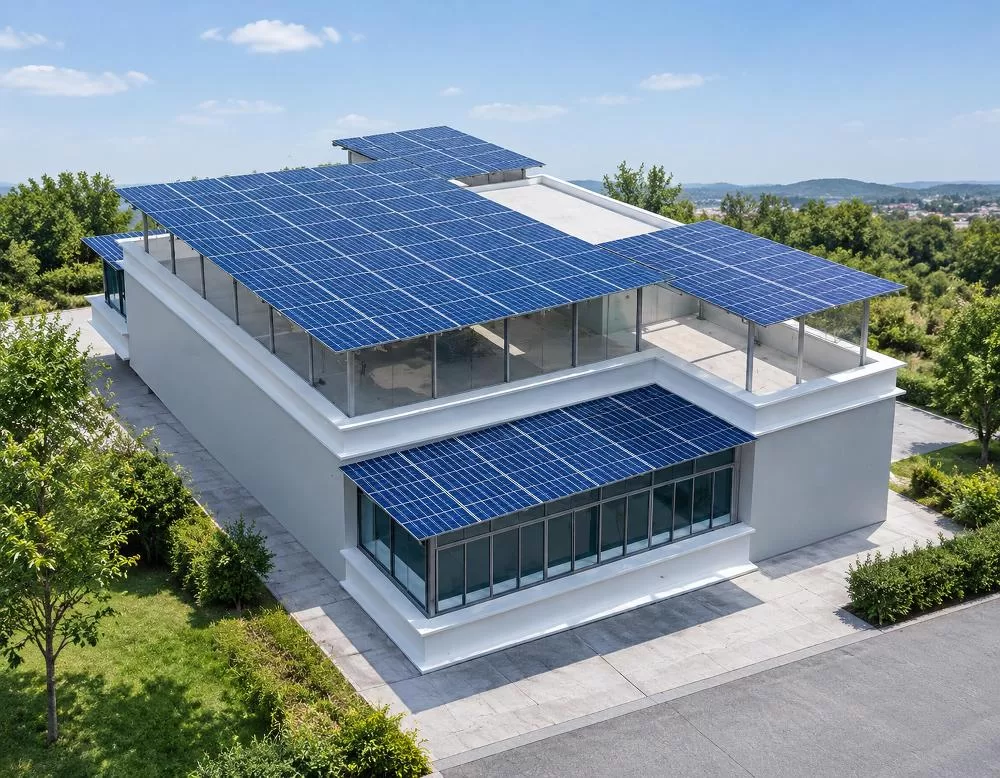
Labor costs often rival material costs on a solar project, so assembly speed isn’t a minor convenience, it’s a line item. Extruded aluminium profiles with precisely cut cross-sections allow corner brackets, sometimes called corner codes, to lock frame sections together without welding or specialized tooling.
This design detail reduces on-site assembly time meaningfully. Crews snap corner keys into pre-formed slots rather than measuring, cutting, and fastening custom joints, which lowers the chance of alignment errors that lead to uneven panel seating. Fewer errors mean fewer callbacks, and fewer callbacks mean a better margin on every installation.
Choosing between frame specifications becomes easier when you line up the numbers side by side rather than relying on marketing claims.
| Specification | Typical Range or Standard | Why It Matters |
|---|---|---|
| Material grade | 6000 series aluminium alloy | Balances strength, weight, and extrudability |
| Wall thickness | Greater than 0.7mm | Resists bending under snow and wind load |
| Design type | Universal mould or custom cross-section | Matches standard panels or specialized site needs |
| Surface treatment | UV and pollutant-resistant coating | Preserves color and prevents long-term corrosion |
| Expected service life | Over 25 years (per supplier specification) | Aligns with typical panel warranty periods |
| Minimum order quantity | Around 10 tons post-sample confirmation | Reflects industrial-scale extrusion production |
This table isn’t exhaustive, but it covers the variables that most directly affect long-term performance and project cost. Any supplier conversation should start from these baseline numbers before moving into custom requests.
Rooftop residential installs get most of the attention in marketing material, but aluminium solar framing shows up in far more places than that. Ground-mounted solar farms rely on heavier structural variants, while agricultural photovoltaic setups, sometimes paired with irrigation pumping systems, use frames suited to remote and sometimes unattended environments.
Solar carports and canopies represent a growing segment too, since they combine shading function with power generation in parking structures and commercial lots. Municipal applications like solar-powered street lighting and traffic signal systems lean on smaller-scale frame profiles, built for durability rather than large surface area.
Building-integrated photovoltaics push the material further still, demanding profiles that satisfy both structural and architectural requirements simultaneously. That dual demand, holding panels securely while fitting into a building’s visual design, is pushing custom extrusion work into territory standard universal moulds can’t reach.
Does a thicker aluminium profile always mean a stronger frame?
Generally yes, but thickness alone doesn’t tell the full story. Cross-sectional geometry, like flange angles and internal ribbing, also contributes to how a profile resists bending. A well-engineered thinner profile can sometimes outperform a poorly designed thicker one.
Can one universal mould frame fit every solar panel brand?
Universal moulds are designed to accommodate most standard panel dimensions on the market, but panel thickness and frame width still vary by manufacturer. Checking panel specifications against the mounting rail’s groove width before ordering avoids a mismatch at installation time.
Why does surface treatment matter if the base metal is already aluminium?
Raw aluminium naturally resists rust better than steel, but it still reacts with prolonged UV exposure, acid rain, and airborne pollutants. Surface treatments slow this degradation, helping the frame hold its structural and visual integrity across decades of outdoor use.
Is a custom cross-section worth the extra lead time compared to a standard profile?
It depends on the site. Standard rooftop installs rarely need customization. Large-scale farms, unusual roof pitches, or BIPV projects often benefit enough from a tailored cross-section that the added lead time pays for itself in reduced installation friction.
Specifying the right aluminium profile for solar panel mounting comes down to matching alloy grade, wall thickness, and cross-section geometry to the realities of your installation site. A coastal ground-mount farm has different demands than a suburban rooftop, and treating them identically invites avoidable failures.
For us, working with manufacturers who understand both the extrusion process and the surface treatment chemistry behind long-term weather resistance tends to separate durable installations from ones that need early maintenance. Whether you’re sourcing a universal mould for standard rooftop panels or commissioning a custom aluminium profile for solar panel mounting on a large ground-mounted array, the specification choices made early in the project are the ones that determine how well it holds up twenty-five years from now.