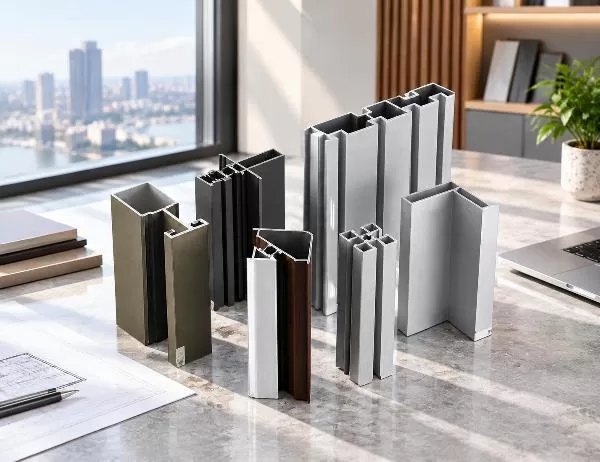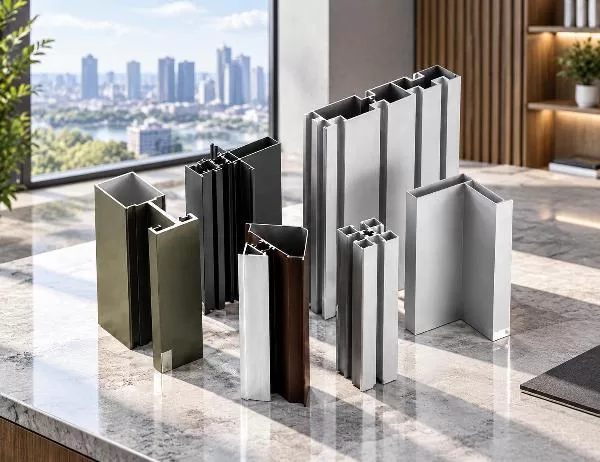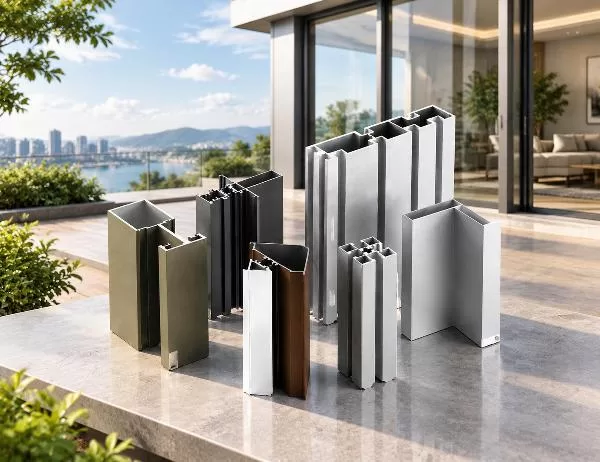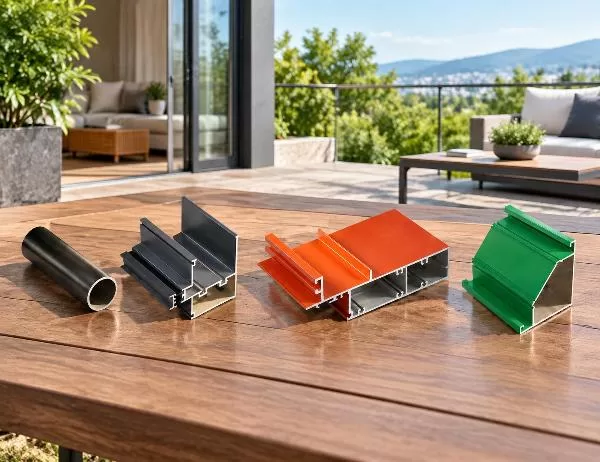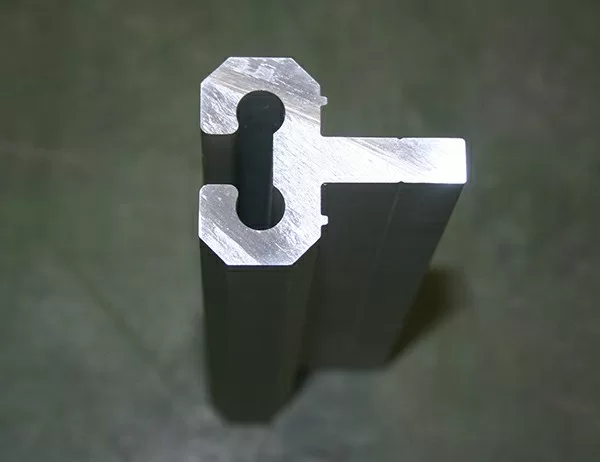
An aluminium extrusion profile is only as good as the alloy behind it and the die that shapes it. Buyers searching for the right profile usually face a narrower question: which alloy series, temper, and finish will actually survive their application without costing more than necessary. That decision gets harder once you factor in thermal performance, load bearing, and the surface treatment required for outdoor exposure or interior aesthetics.
This guide breaks down how aluminium extrusion profiles are engineered, where each alloy series fits, and how surface finishing changes long-term performance. The goal is to give buyers, architects, and fabricators enough context to specify profiles correctly the first time, rather than discovering mismatches after installation.
Extrusion performance comes down to three variables working together: alloy composition, temper, and cross-sectional design. Change any one of them and the mechanical behavior shifts, sometimes in ways that aren’t obvious until the part is under load.
Alloy series numbers (1000 through 7000) indicate the dominant alloying element. A 6000-series profile, alloyed primarily with magnesium and silicon, balances strength and extrudability well enough that it dominates architectural and structural work. The 6063-T5 designation in particular shows up constantly in window and door frames because it extrudes cleanly into complex hollow shapes while holding decent mechanical properties.
Higher-strength needs push specifiers toward 7000-series alloys, which trade some extrudability for tensile strength. Meanwhile, 1000-series aluminium, valued for purity rather than strength, tends to show up in electrical and chemical-resistant applications where structural load isn’t the concern.
Temper designation matters just as much as alloy choice. A T6 temper has been solution heat-treated and artificially aged to peak strength, while T4 stops at natural aging and leaves more ductility for post-extrusion forming. Specifying the wrong temper for a bending or machining operation can crack a part that would have performed fine as a raw section.
| Alloy Series | Typical Temper | Primary Characteristic | Common Use |
|---|---|---|---|
| 1000 | O, F | High purity, corrosion resistance | Electrical components, chemical piping |
| 2000 | T3, T4 | High strength, lower corrosion resistance | Aerospace and transport fittings |
| 3000 | O, H112 | Moderate strength, good formability | General fabrication |
| 5000 | H112 | Good weldability, marine resistance | Marine and structural panels |
| 6000 | T5, T6 | Balanced strength and extrudability | Windows, doors, curtain walls |
| 7000 | T6, T8 | High strength, higher cost | Structural and load-bearing parts |
This table isn’t a ranking. It’s a map of tradeoffs. A curtain wall doesn’t need 7000-series strength, and a load-bearing bracket has no business running on 1000-series purity alloy. Matching the series to the actual mechanical demand keeps material costs proportional to the job.
Raw mill-finish aluminium oxidizes on contact with air, forming a thin protective layer almost immediately. That natural oxide layer is real, but it’s too thin and inconsistent to rely on for decades of weather exposure, which is why almost every architectural profile leaves the factory with additional surface treatment.
Anodizing thickens that oxide layer electrochemically, producing a hard, corrosion-resistant surface that also accepts dye for color consistency. Electrophoresis works differently, depositing a resin-based coating through an electric current, and tends to produce a smoother, more uniform film than dip coating methods.
Powder coating remains the most common choice for colored architectural profiles because it applies a durable, textured or matte finish without solvents. For coastal or high-UV environments, fluorocarbon coating (PVDF) resists chalking and color fade better than standard powder coat over long exposure periods, which is why it’s specified more often on curtain walls and high-rise facades than on interior partition framing.
Wood grain transfer finishing has carved out its own niche, letting aluminium mimic timber appearance for architects who want the maintenance profile of metal with the visual warmth of wood. It’s a decorative process layered on top of a powder-coated base, not a substitute for structural coating.
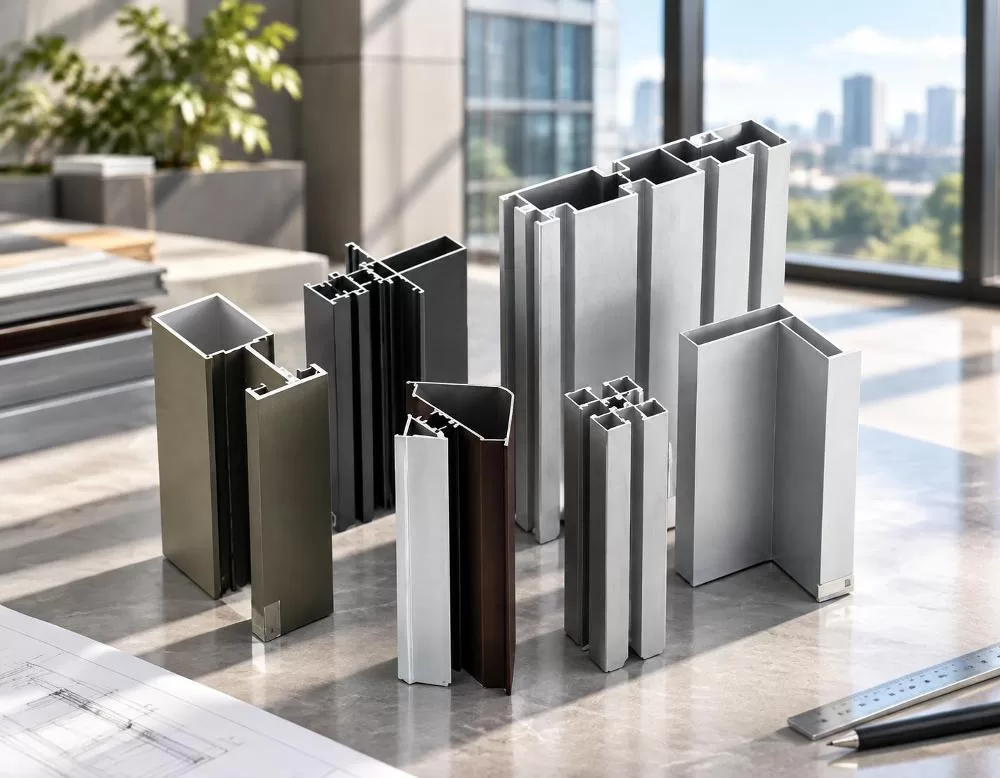
Aluminium conducts heat efficiently, which is exactly the problem in window and door frames located at the boundary between conditioned and unconditioned space. Without interruption, a solid aluminium frame becomes a thermal bridge, pulling heat out in winter and in during summer.
Thermal break profiles solve this by inserting a polyamide or similar low-conductivity strip between the interior and exterior aluminium sections, mechanically locking the two halves together while breaking the direct metal path. This construction is now close to standard for residential and commercial glazing systems in climates with meaningful heating or cooling loads.
Specifiers should treat thermal break as a system-level decision, not a profile add-on. The strip material, the mechanical crimping process, and the overall frame depth all affect how much the thermal break actually reduces conductive loss.
Outside of architecture, extruded aluminium heat sinks handle a completely different job: pulling heat away from electronic components fast enough to prevent thermal failure. The fin geometry on these profiles, thin, closely spaced ribs, exists purely to maximize surface area for convective cooling.
Because extrusion allows nearly unlimited cross-sectional complexity within die constraints, heat sink profiles can pack far more surface area into a given footprint than a machined or cast part could achieve economically. That’s the core reason extrusion dominates this niche rather than casting.
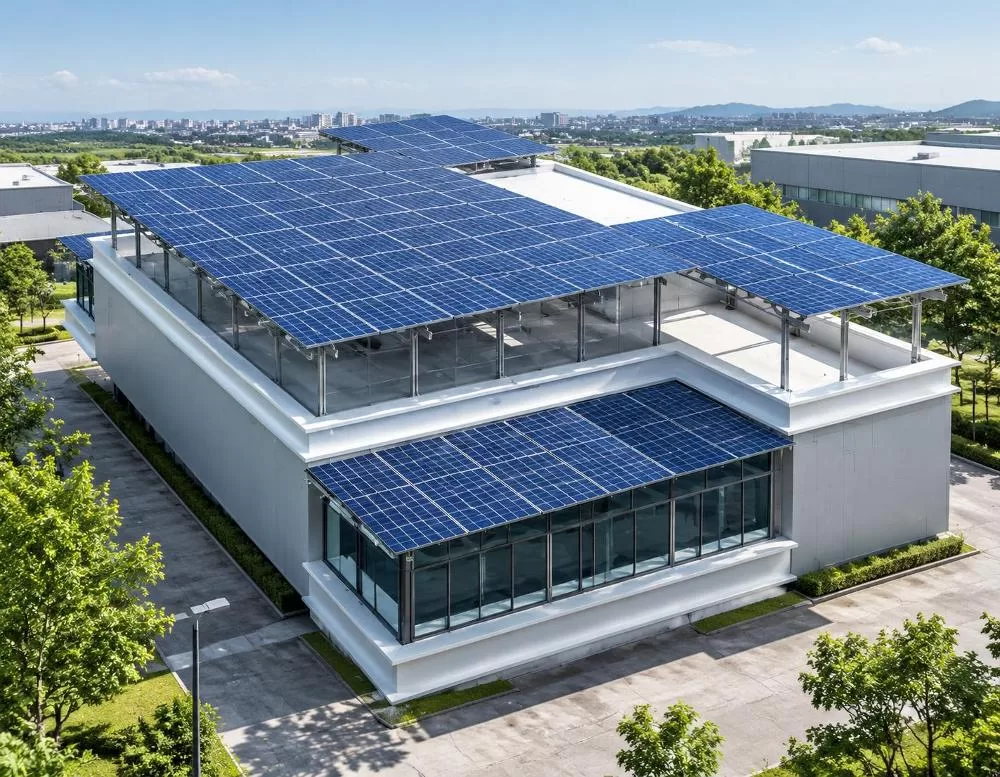
Solar mounting frames borrow from the same structural logic as heat sinks but prioritize load and weather resistance over thermal transfer. Aluminium framing for photovoltaic arrays needs enough rigidity to survive wind and snow loading while staying light enough that roof-mounted systems don’t add excessive structural demand.
Extrusion produces the raw cross-section, but very few profiles ship as-extruded. Deep processing turns a generic length of aluminium into a part that fits a specific assembly:
Ordering deep-processed profiles rather than raw stock shifts fabrication cost and complexity onto the supplier, which usually pays off on high-volume runs where consistency matters more than in-house flexibility.
A practical selection process usually runs in this order:
Skipping any of these steps tends to surface later as a warranty claim or a field modification, both of which cost more than getting the specification right initially.
Is 6063-T5 the same as 6061-T6?
No. Both are 6000-series alloys, but 6061 generally carries higher strength while 6063 extrudes more easily into intricate hollow profiles, which is why 6063-T5 is the standard for window and door sections.
Does anodizing or powder coating last longer outdoors?
Both can perform well for years, but they fail differently. Anodizing resists scratching better since the coating is integral to the metal surface, while powder coating (especially PVDF-based) tends to hold color better under prolonged UV exposure.
Can the same aluminium extrusion profile be used for both curtain walls and heat sinks?
Not typically. Curtain wall profiles prioritize structural rigidity and weather sealing, while heat sink profiles are extruded with fin geometries optimized for surface area, not load bearing.
Why do some profiles cost more per kilogram than others of the same alloy?
Die complexity and wall thickness tolerances drive cost more than raw alloy price. A profile with tight internal geometry or multiple voids requires more extrusion press time and tighter process control.
Getting an aluminium extrusion profile right isn’t about picking the strongest or most expensive option available. It’s about matching alloy, temper, and finish to the actual mechanical and environmental demands of the project, then confirming the fabricator can deliver the deep processing the design requires.
For us at Goldapple-Alu, that process runs through high-capacity press equipment capable of producing large, complex cross-sections alongside a surface treatment lineup spanning anodizing, electrophoresis, powder coating, and PVDF. Whether the requirement is a thermal break window frame, an industrial heat sink, or a custom curtain wall section, the underlying decision tree stays the same: define the load, pick the alloy series that satisfies it without overspending, and select the finish that matches the environment the aluminium extrusion profile will actually live in.