Sourcing aluminum extrusions sounds simple until the wrong alloy shows up on a job site. A window installer once told me his crew spent an entire afternoon trying to fit profiles that looked identical to the sample but flexed under pressure the sample never saw. That gap between spec sheet and reality is exactly why choosing an aluminum profile supplier matters more than most buyers assume. This guide walks through what actually separates a dependable supplier from one that just ships metal.
Aluminum is not one material. It is a family of alloys, and each series behaves differently under load, heat, and weather. A 6063-T5 profile suited for a window frame will not perform the same way as a 6061-T6 bar meant for structural framing.
Suppliers who work across multiple series, from 1000-series high-purity aluminum through 7000-series high-strength alloys, tend to understand which composition fits which job. That range signals depth rather than a narrow catalog stretched to look broad.
Temper matters just as much as alloy family. A profile listed as O (annealed) behaves very differently from one tempered to T6. Getting this wrong is rarely dramatic, it just shows up months later as warping, loosening joints, or premature fatigue.
Two profiles can share the same alloy and still perform worlds apart once the environment gets involved. Surface treatment is what stands between raw aluminum and decades of exposure to rain, UV, and salt air.
Common finishing options include:
Picking the right finish is less about aesthetics and more about matching the coating’s resistance profile to the climate the product will actually face. A coastal building and a dry inland warehouse have very different corrosion pressures, and the finish should reflect that.
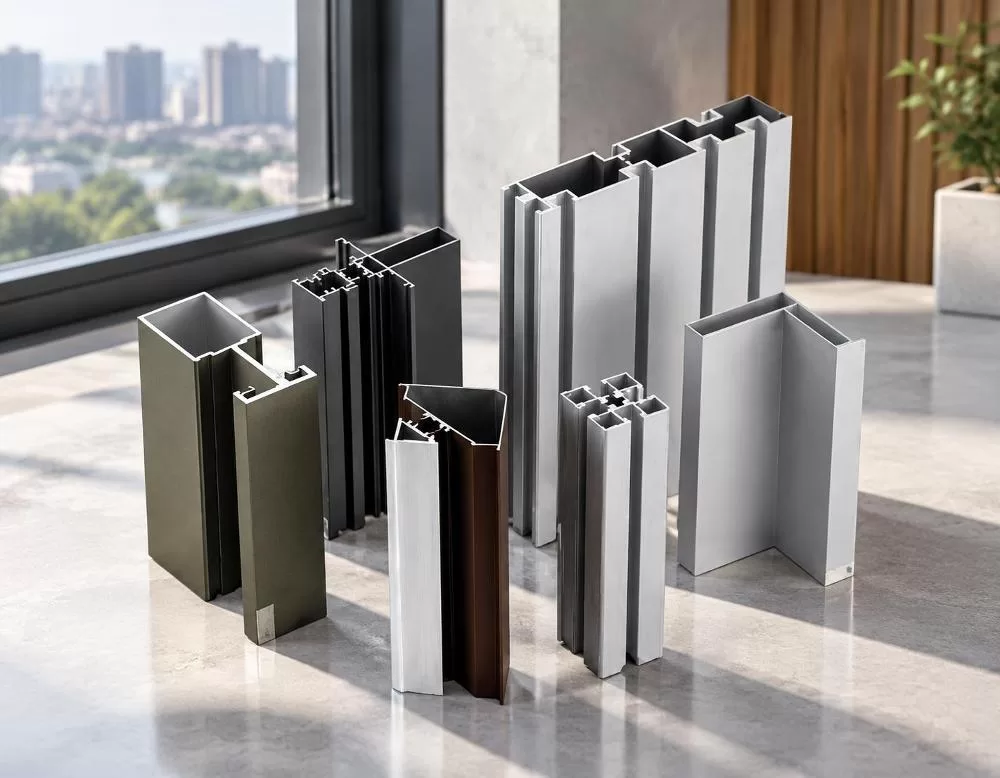
Not every extrusion is built for the same job, and treating them as interchangeable is where a lot of project delays start.
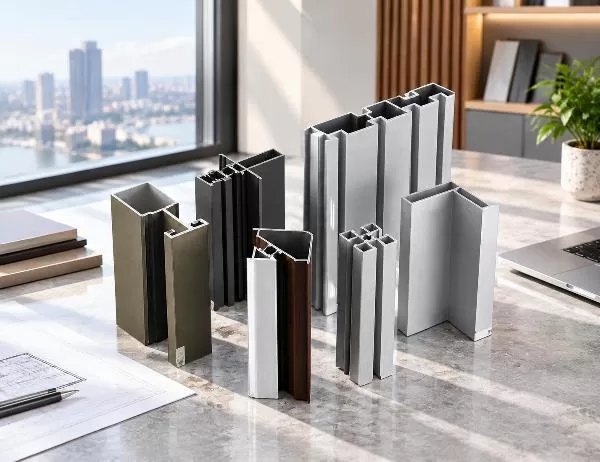
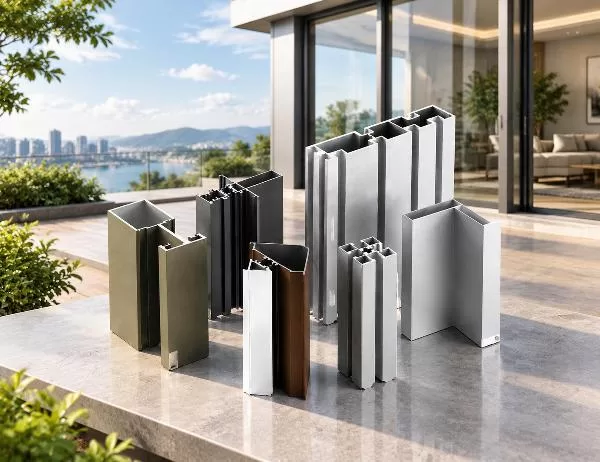
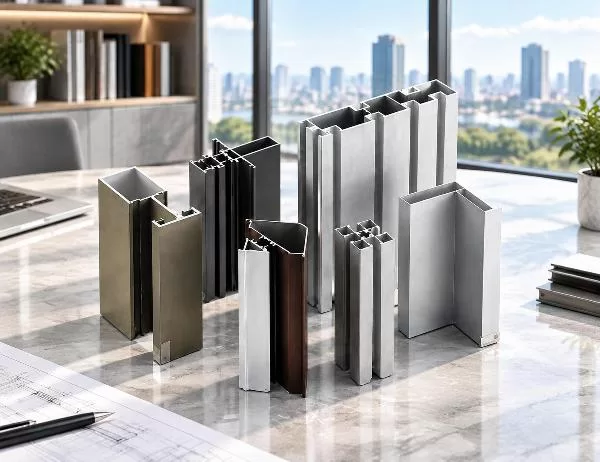
Window and door systems rely on tight tolerances and, increasingly, thermal break construction. Thermal break profiles separate the interior and exterior aluminum sections with an insulating barrier, which reduces heat transfer through the frame. For buildings chasing better energy performance, this detail is not optional trim, it is functional.
Curtain wall systems carry different demands entirely. These profiles need to handle wind load, thermal expansion, and long spans without visible sagging. Structural integrity here depends heavily on precision extrusion, since even small dimensional inconsistencies compound across a multi-story facade.
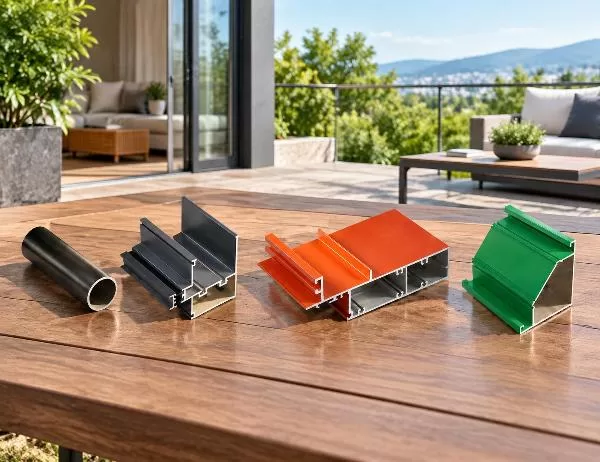
Industrial heat sinks ask for a completely different design logic. Fin geometry and surface area drive heat dissipation, so these extrusions are shaped for thermal performance rather than visual finish. They show up frequently in electronics enclosures and photovoltaic equipment, where component temperature directly affects lifespan.
Solar mounting frames sit at the intersection of structural and environmental demands, holding panels steady through decades of weather while resisting corrosion in often-exposed rooftop conditions.
Extrusion is where a heated aluminum billet gets pushed through a die to form its cross-section. It sounds mechanical and unremarkable until you consider what happens when the press lacks capacity or consistency.
High-tonnage press equipment, in the range of 5000T, allows for larger and more complex cross-sections without sacrificing tolerance accuracy. This matters for profiles with multi-void internal geometry or pre-drilled screw holes, where misalignment during extrusion creates problems that no amount of downstream processing can fix.
A profile with tight tolerances assembles cleanly on site. A profile that varies even slightly from spec turns into extra labor, filler material, or rejected batches. For contractors working on tight schedules, this single variable often decides whether a supplier gets a second order.
Raw extrusions rarely arrive ready to install. Most projects need additional work, and suppliers offering deep processing in-house tend to shorten timelines considerably.
Typical secondary services include:
Handling these steps under one roof reduces the back-and-forth between separate vendors, and it usually means fewer handoffs where measurements or specs get lost in translation.
| Alloy Series | Typical Strength | Common Use Case | Notable Trait |
|---|---|---|---|
| 1000 | Low | High-purity industrial parts | Excellent conductivity |
| 3000 | Moderate | General fabrication | Good formability |
| 5000 | Moderate-High | Marine, transport | Strong corrosion resistance |
| 6000 | Moderate-High | Windows, curtain walls, structural framing | Balanced strength and extrudability |
| 7000 | High | Structural, aerospace-adjacent uses | High mechanical strength |
This table is a starting point, not a substitute for engineering review. Final alloy choice should always account for load requirements, environmental exposure, and finishing compatibility.
Quality claims are easy to print and harder to back up. Ask any potential aluminum profile supplier to show documentation for certifications such as ISO9001 for quality management, ISO14000 for environmental management, and ISO10012 for measurement system accuracy. These certifications don’t guarantee perfection, but their absence is a legitimate red flag worth asking about directly.
What is the difference between anodizing and powder coating?
Anodizing creates a hard oxide layer through an electrochemical process, offering strong scratch and corrosion resistance with a more metallic look. Powder coating applies a colored polymer layer, giving broader color choices and a different texture, though performance depends on the specific formulation and application quality.
Can the same aluminum profile work for both windows and curtain walls?
Sometimes, but not reliably. Window frames prioritize thermal break performance and sealing, while curtain wall profiles prioritize structural span and wind load resistance. A supplier should be able to explain which profile fits which structural role rather than offering one universal product.
Why do some industrial heat sinks look so different from architectural profiles?
Heat sink extrusions are shaped around fin count and surface area to maximize heat dissipation, not visual appeal. Architectural profiles are shaped around structural fit and finish quality. The design priorities simply diverge.
Does a higher alloy series always mean a better profile?
Not necessarily. Higher series like 7000 offer more strength but can be harder to extrude into complex shapes and may cost more than the application requires. Matching series to actual load and use case matters more than defaulting to the strongest option available.
Price comparisons matter, but they rarely tell the whole story. A profile priced lower on paper can cost more once poor tolerances, weak finishes, or missing certifications create downstream problems.
When evaluating an aluminum profile supplier, it helps to ask a few direct questions:
Goldapple-Alu Group works across these categories directly, producing aluminum profiles for door and window systems, curtain walls, decorative applications, and industrial uses, with surface treatments ranging from mill finish to PVDF and thermal break construction available depending on project needs.
Choosing the right aluminum profile supplier ultimately comes down to matching technical capability to real project demands rather than chasing the lowest quote. A supplier who understands alloy behavior, finishing chemistry, and extrusion precision saves you from problems that only surface after installation, when fixing them costs far more than sourcing correctly the first time.