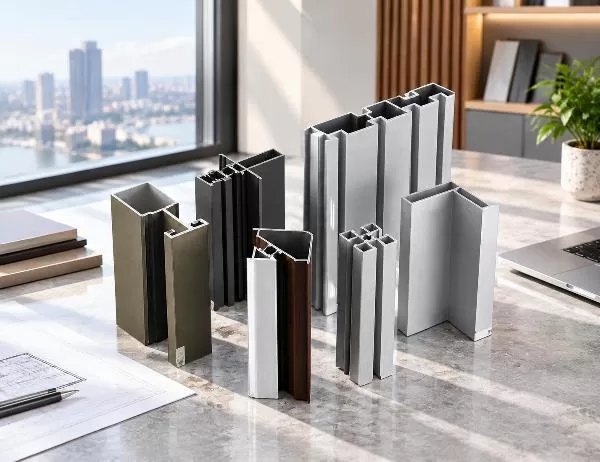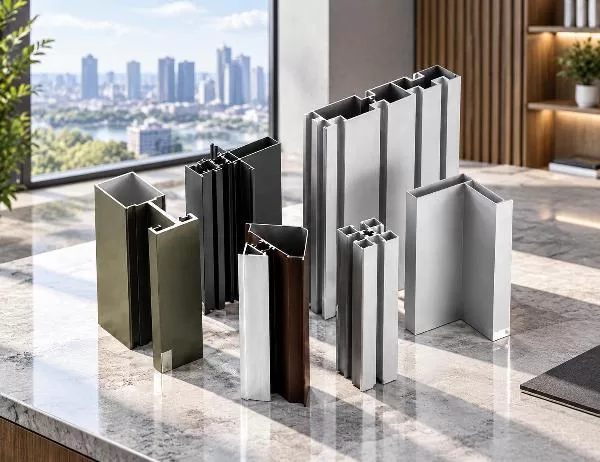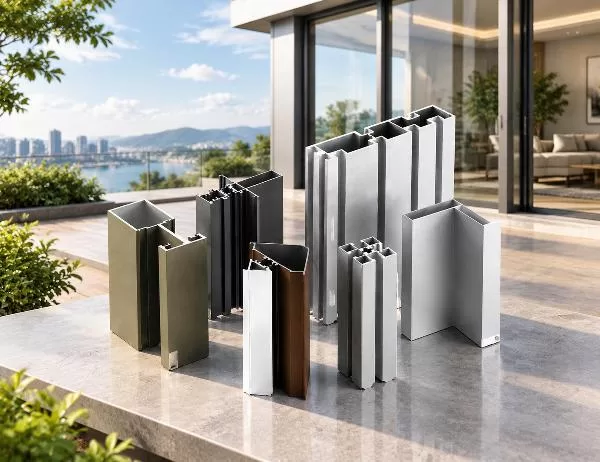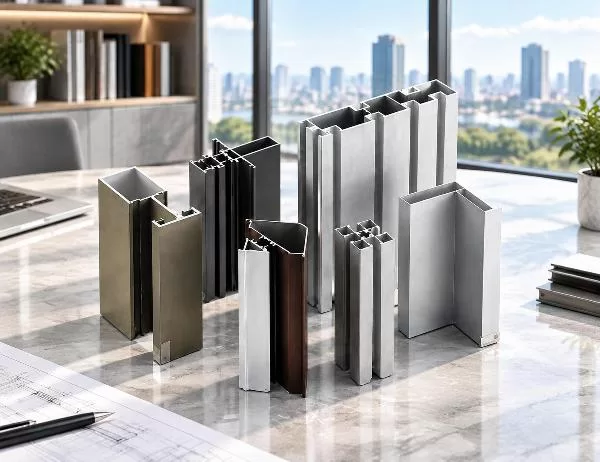
Furniture designers and fabricators increasingly turn to aluminum furniture profiles when a project demands strength without excess weight. Wood warps, plastic sags under load, and steel adds mass that complicates shipping and assembly. Aluminum extrusions solve a specific problem: they hold tight tolerances, resist moisture, and can be shaped into complex cross-sections that snap together like a mechanical puzzle. This guide walks through the material properties, finishing options, and selection criteria that matter most when specifying aluminum profiles for furniture applications.
Furniture that lives outdoors or in commercial settings faces a harsher reality than a living room sofa. Humidity, UV exposure, and repeated cleaning cycles wear down lesser materials within a few seasons. Solid wood swells and contracts with moisture, and untreated steel rusts if the coating chips even slightly.
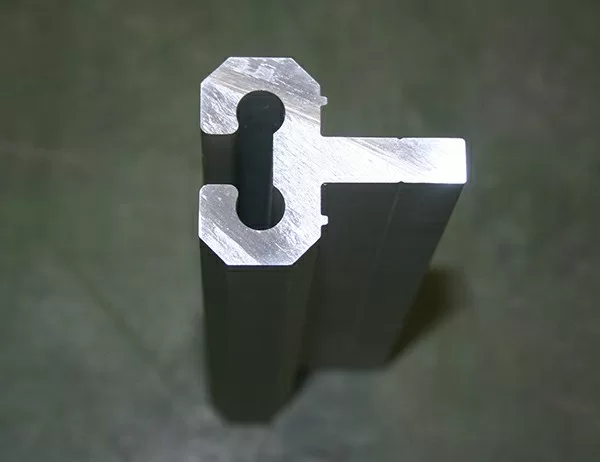
Aluminum sidesteps most of that trouble because the metal forms a natural oxide layer on contact with air. That layer, when reinforced through anodizing or powder coating, becomes the first line of defense against corrosion. The extrusion process also lets manufacturers embed screw channels, cable routing slots, and joinery grooves directly into the profile, which reduces the need for separate brackets or fasteners during assembly.
There’s a manufacturing logic here too. Extruding aluminum is closer to squeezing toothpaste through a shaped nozzle than cutting or molding. Once a die is cut, producing a thousand meters of identical profile costs little more per unit than producing a hundred. That economy of scale is part of why aluminum framing shows up so often in modular office furniture, outdoor seating systems, and shopfitting fixtures.
Not every aluminum alloy behaves the same way once it leaves the extrusion press. Furniture applications typically call for 6000-series alloys, prized for a workable balance of strength and machinability. The alloy choice affects three things a furniture designer should weigh before finalizing a spec:
Wall thickness above 0.7mm is a common baseline for structural furniture components, since thinner walls tend to flex under repeated load and can develop stress fatigue at joints over time.
The raw extrusion is only half the story. Surface treatment determines how the profile looks, how it feels to the touch, and how long it survives outdoor or high-traffic use. For us, the finishing stage is where a generic metal bar becomes a furniture-grade component.
Anodized aluminum profiles undergo an electrochemical process that thickens the natural oxide layer, producing a hard, metallic-look surface with genuinely improved abrasion resistance compared to bare aluminum. Some anodized finishes, including Goldapple-Alu’s antibacterial anodized aluminum, incorporate an additional antibacterial coating layer suited for environments where sanitary standards matter, such as healthcare furniture, hospitality counters, or shared workspace fixtures. According to the manufacturer, this finish also delivers strong weatherability and corrosion resistance for outdoor structural use.
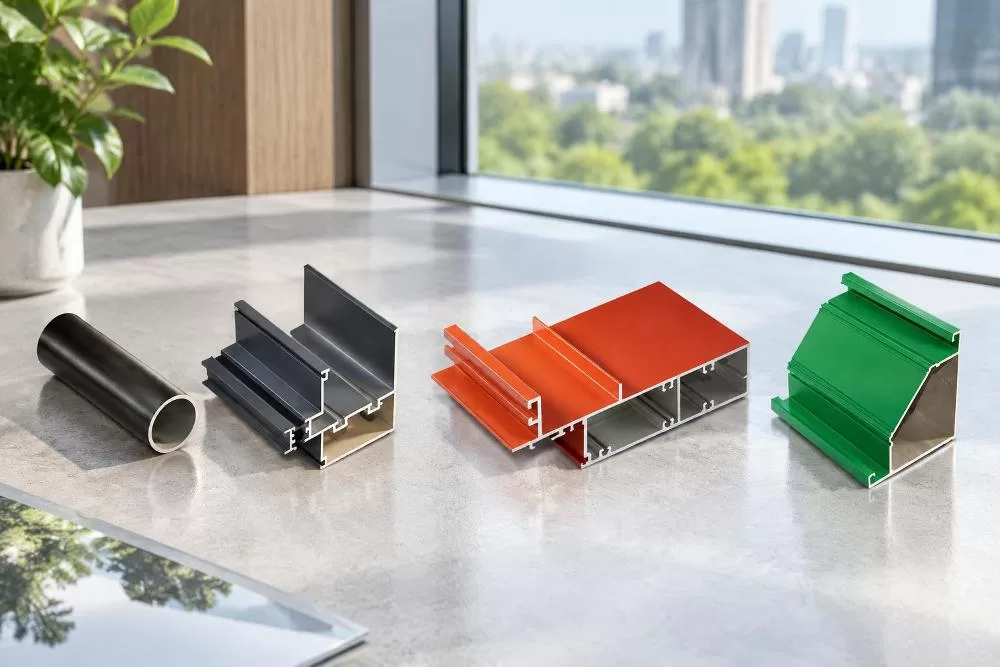
Powder coating, by contrast, sprays a dry pigment onto the profile and cures it under heat, producing a broader palette of colors and a slightly thicker protective film. It suits furniture where color matching to a brand or interior scheme takes priority over the brushed metallic look.
Other finishing routes exist for specialized furniture projects:
| Finish Type | Best Suited For | Key Advantage |
|---|---|---|
| Anodizing | Outdoor furniture, high-hygiene interiors | Hard oxide layer, metallic appearance |
| Powder Spraying | Colorful indoor/outdoor furniture | Wide color range, uniform coating |
| Electrophoresis | Fine architectural detailing | Smooth, even film thickness |
| Wood Grain Transfer | Furniture mimicking natural wood | Aesthetic warmth without wood’s upkeep |
| PVDF Coating | Long-term exterior exposure | Extended fade and weather resistance |
Choosing between these isn’t purely aesthetic. A cafe patio table gets rained on and scraped by chairs daily, so anodized or PVDF-coated profiles tend to outlast a basic painted finish in that setting.
Selecting the right cross-section shape is arguably more consequential than picking the finish, since a poorly designed profile geometry will flex or crack regardless of how well it’s coated. Here’s a practical way to think through the decision:
Furniture built from modular aluminum framing, like shelving units or knock-down desks, tends to favor open C-channel or T-slot profiles because they allow panels to slide in without extra hardware. Load-bearing legs and structural frames, on the other hand, do better with closed rectangular or square tube sections.
Does anodized aluminum furniture need extra maintenance?
Not typically. The anodized layer is chemically bonded to the metal rather than sitting on top like paint, so routine cleaning with mild soap and water is generally enough to maintain the surface over years of use.
Can aluminum profiles be used for outdoor furniture in coastal areas?
Yes, provided the finish is suited for it. Anodized or PVDF-coated profiles handle salt air and humidity better than mill-finish aluminum, which can develop surface pitting over extended exposure without a protective coating.
Is aluminum furniture framing heavier or lighter than steel?
Lighter. Aluminum’s density is about a third that of steel, so furniture frames built from aluminum profiles are easier to ship flat-packed and to move once assembled, without sacrificing structural rigidity when wall thickness is specified correctly.
Do all aluminum profiles come in the same standard lengths?
Not always, but many suppliers offer profiles cut to lengths between one and eight meters, with custom cutting available depending on order volume and lead time.
Furniture manufacturers working at scale run into a different set of questions than a one-off custom builder. Lead time, minimum order quantities, and consistency across production batches all affect whether a supplier fits a factory’s schedule.
A few sourcing factors worth checking before committing to a supplier:
Goldapple-Alu, for instance, operates a 530,000-square-meter production facility supplying finished profiles for door, window, curtain wall, decoration, and industrial applications, which gives a sense of the scale at which aluminum extrusion for furniture and architectural uses typically operates.
Specifying aluminum furniture profiles comes down to matching three variables: the alloy and wall thickness for structural needs, the surface finish for durability and appearance, and the cross-section geometry for how the furniture actually gets assembled and used. Skipping any one of these in the design phase tends to surface as a problem later, whether that’s a wobbly table leg or a finish that fades faster than expected outdoors. Getting the specification right at the start saves rework once the furniture is in production, and it’s why experienced designers treat profile selection as an engineering decision rather than a purely aesthetic one when working with aluminum furniture profiles.