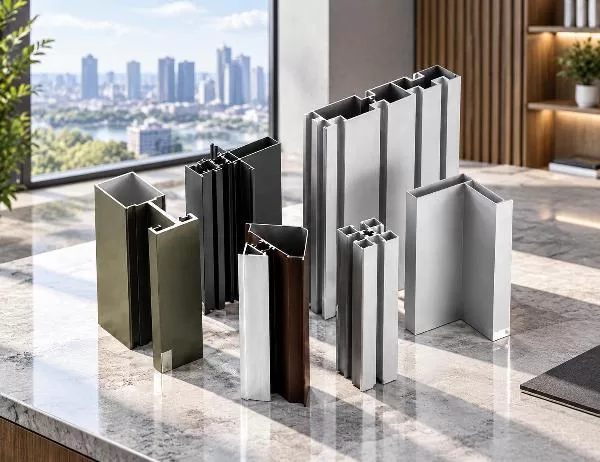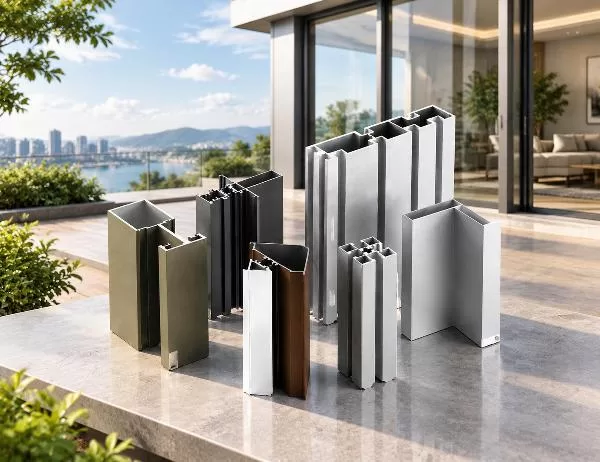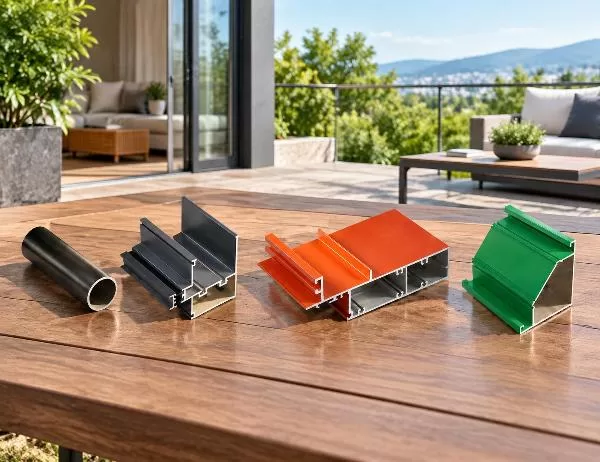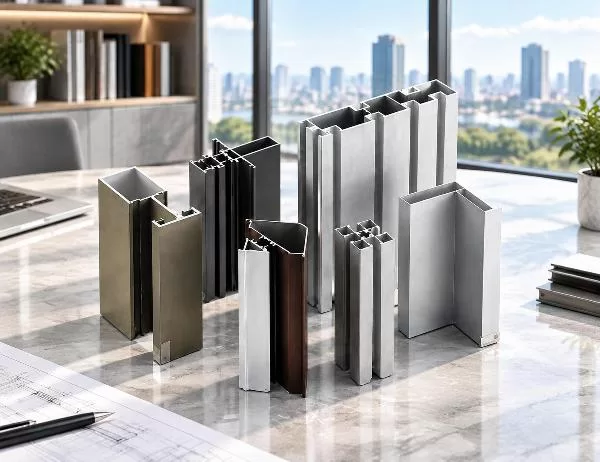
Aluminium extrusion profiles have become indispensable in contemporary construction and industrial manufacturing. These versatile components solve a recurring challenge: how to create lightweight yet durable structures that meet precise dimensional requirements while remaining cost-effective. From the skeletal frameworks of curtain walls to the heat dissipation channels in electronics, extruded aluminum addresses problems that traditional materials struggle to solve efficiently.
The process itself transforms solid aluminum billets into complex cross-sectional shapes by forcing heated metal through custom dies. This method produces components with consistent geometry along their entire length, eliminating the need for multiple fabrication steps. For engineers and architects, this means fewer joints, reduced assembly time, and structures that maintain their integrity across temperature fluctuations and mechanical stress.
Extrusion relies on controlled deformation under high pressure and temperature. Aluminum billets are heated to approximately 400-500°C, making the metal malleable without reaching its melting point. Hydraulic presses apply forces ranging from 1000 to 8000 tons, pushing the softened billet through a shaped die opening. The emerging profile cools rapidly, locking in the desired cross-section.
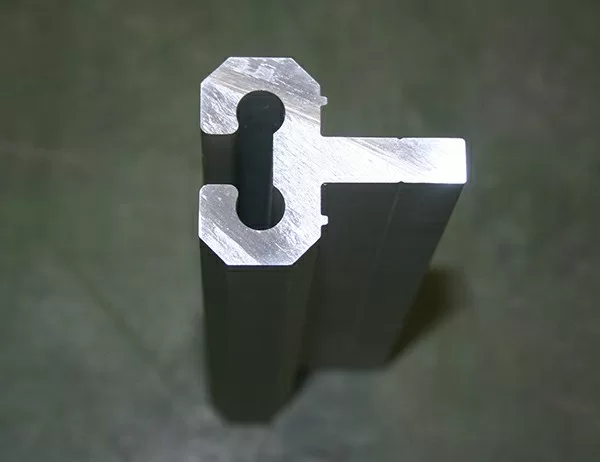
Die design determines what shapes are possible. Simple geometric profiles like angles and channels require straightforward tooling. Complex hollow sections with internal voids demand multi-part dies where mandrels create the cavities. This flexibility explains why extruded profiles can accommodate everything from simple rectangular tubes to intricate heat sink fins with dozens of thin walls.
The choice of aluminum alloy affects both the extrusion process and the final properties. 6063 alloy dominates architectural applications due to its excellent extrudability and moderate strength after heat treatment. Industrial applications often specify 6061 for higher strength, though it requires more extrusion force. 7000-series alloys provide maximum strength but are harder to extrude and typically reserved for aerospace or high-stress structural components.
Raw extruded aluminum, known as mill finish, oxidizes naturally to form a thin protective layer. While adequate for some industrial uses, most applications benefit from engineered surface treatments that enhance corrosion resistance, appearance, or both.
Anodizing creates a thicker, more uniform oxide layer through electrochemical conversion. This process offers several advantages:
Powder coating applies a dry thermoplastic or thermoset polymer that melts and cures into a durable skin. This method produces the widest color range and can achieve textures from smooth gloss to rough matte. The coating thickness typically ranges from 60 to 120 microns, providing excellent impact resistance and UV stability.
Electrophoresis combines anodizing with paint application, creating a multi-layer protection system. The process deposits charged paint particles onto the anodized surface through an electrical field, resulting in uniform coverage even in complex geometries. This treatment excels in architectural applications where long-term weathering resistance matters.
For specialized aesthetic requirements, wood grain transfer uses heat and pressure to apply printed patterns onto powder-coated surfaces. The result mimics natural wood textures while retaining aluminum’s structural advantages. PVDF fluorocarbon coatings offer high weather resistance, helping maintain color stability over many years in harsh coastal or industrial atmospheres.
The 1000-series alloys contain 99% or higher aluminum content, making them highly conductive but relatively soft. These profiles suit electrical bus bars and chemical processing equipment where corrosion resistance outweighs strength requirements.
3000-series alloys incorporate manganese for moderate strength improvement while maintaining good formability. These are common in heat exchangers and cooking equipment where thermal conductivity remains important.
The 5000-series uses magnesium as the primary alloying element, offering good corrosion resistance without heat treatment. Marine applications and pressure vessels often specify these alloys for their performance in saltwater environments.
6000-series alloys dominate structural and architectural uses. The silicon and magnesium combination allows heat treatment to T4, T5, or T6 tempers, balancing strength, extrudability, and surface finish. 6063-T5 serves as the industry standard for window frames and curtain walls, providing adequate strength at 150-200 MPa tensile strength while maintaining excellent surface quality.
When maximum strength is non-negotiable, 7000-series alloys combine zinc, magnesium, and copper to achieve tensile strengths exceeding 500 MPa. Aerospace applications and high-performance sporting goods use these profiles despite their higher cost and reduced corrosion resistance.
Heat transfer through aluminum profiles creates a significant energy efficiency challenge in building design. Metal’s high thermal conductivity allows outdoor temperatures to bypass insulation, creating condensation risks and increasing HVAC loads. Thermal break systems interrupt this conductive path by inserting low-conductivity polyamide strips between interior and exterior aluminum sections.
The manufacturing process machines grooves into extruded profiles, then inserts polyamide struts under tension. These polymer bridges maintain structural continuity while substantially reducing thermal conductivity compared to solid aluminum sections. The resulting assembly functions as three distinct elements: an exterior profile, an interior profile, and a non-conductive spacer.
Performance depends on polyamide geometry and composition. Standard thermal breaks use 14-24mm wide strips reinforced with 25% glass fiber. This configuration can help window assemblies meet building code requirements in cold climates, with more advanced multi-chamber or expanded polyamide geometries improving thermal performance further.
Structural implications require careful design attention. The polyamide zones represent mechanical weak points that must transfer wind loads and support the glazing weight. Testing protocols verify that thermally broken assemblies maintain adequate strength under combined thermal and mechanical stresses across a wide range of operating temperatures.
Standard extrusion produces profiles with consistent cross-sections, but many applications require additional fabrication. CNC machining centers add precision features that would be impossible or cost-prohibitive to incorporate in the extrusion die.
Drilling operations create mounting holes, drainage ports, and fastener access with tight positioning accuracy. Multi-axis machines handle compound angles and precise hole patterns across complex three-dimensional geometries. This precision matters in curtain wall assemblies where hundreds of components must align perfectly during installation.
Milling operations cut slots, pockets, and intricate contours. These features accommodate weatherstripping, gaskets, and interlocking joints. Precision milling also creates the grooves required for thermal break installation, maintaining tight tolerances that ensure proper polyamide placement.
Welding joins extruded sections into rigid frames or complex assemblies. TIG welding produces clean, strong joints suitable for architectural applications where appearance matters. MIG welding offers faster production for industrial structures where cosmetics are secondary. Friction stir welding, though less common, creates joints without melting the base metal, preserving material properties in critical structural components.
Punching and notching operations create precise cutouts for hinges, locks, and other hardware. These features must align with tight tolerances to ensure proper function over decades of use.
Electronic devices generate concentrated thermal energy that must dissipate to prevent performance degradation or failure. Extruded aluminum profiles solve this problem through geometries that maximize surface area while maintaining efficient heat conduction paths from the source.
Fin design follows thermal engineering principles. Thin, closely spaced fins increase surface area but can impede airflow, reducing convective heat transfer. Optimal spacing typically ranges from 2mm to 8mm depending on cooling method and fin height. Natural convection systems use wider spacing since buoyancy-driven airflow has limited velocity. Forced convection with fans allows tighter fin arrays since higher air velocity penetrates narrow channels effectively.
Base thickness affects how efficiently heat spreads from the heat source across the entire fin array. Thin bases reduce material weight but may create hot spots if the spreading resistance exceeds the fin’s dissipation capacity. Computational thermal modeling determines the minimum base thickness that maintains acceptable temperature uniformity.
Surface treatments influence thermal performance. Black anodizing increases radiative heat transfer, which becomes more significant at higher operating temperatures. This treatment can modestly improve total heat dissipation compared to bare aluminum, though it adds cost. For applications where appearance matters, colored anodizing provides aesthetic options with minimal thermal penalty.
Alloy selection balances thermal conductivity against mechanical and extrusion requirements. Pure aluminum (1000-series) offers very high thermal conductivity, but its softness limits mounting options. 6063 alloy has somewhat lower thermal conductivity while providing better mechanical properties for threaded holes and mounting clips. This tradeoff rarely limits thermal performance since the primary resistance usually lies in the convective boundary layer rather than the aluminum itself.
Dimensional accuracy begins with die design and maintenance. As extrusion progresses, dies gradually wear, changing the profile dimensions. Regular measurement protocols catch these variations before they exceed tolerance limits. Precision measurement tools scan the emerging profile continuously, detecting even small deviations. When measurements drift toward specification limits, production stops for die adjustment or replacement.
Surface quality inspection examines finish uniformity, defects, and coating adhesion. Anodized profiles undergo electrical continuity testing to verify oxide layer integrity. Powder-coated surfaces are checked for coverage completeness, adhesion through cross-hatch testing, and film thickness using magnetic or eddy current gauges.
Mechanical property verification occurs through destructive testing of sample sections. Tensile tests confirm that heat treatment achieved the specified temper. Hardness measurements provide a quick proxy for tensile properties during routine production monitoring.
Thermal break assemblies require specialized testing. Mechanical roll-out tests verify that polyamide struts resist separation under defined loads. Thermal conductivity measurements confirm that performance targets are met. Fatigue testing subjects samples to repeated thermal cycling combined with mechanical loads, simulating decades of expansion and contraction.
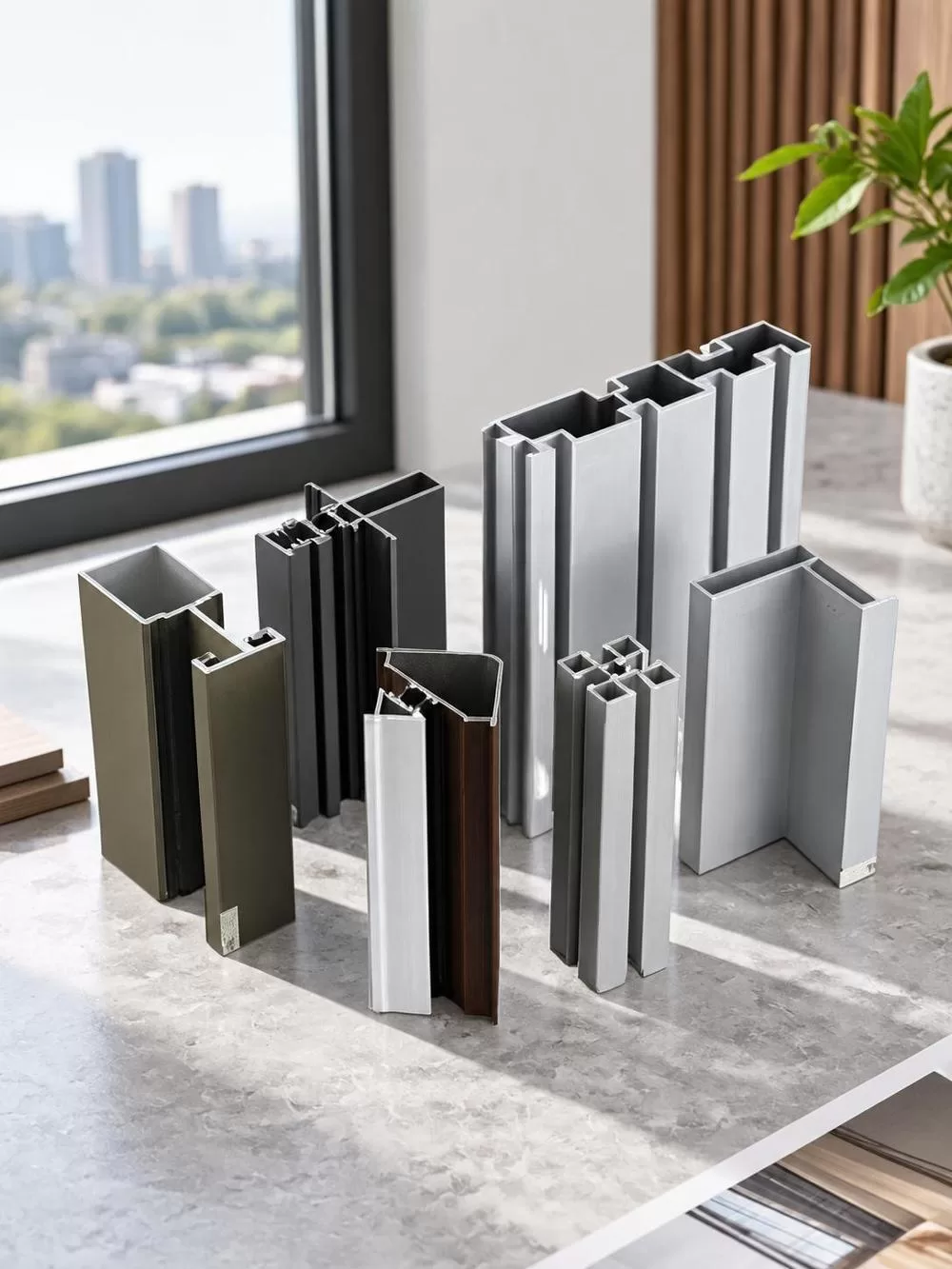
Curtain wall systems demand profiles that accommodate large glass panels while maintaining structural integrity against wind loads. Mullion sections typically feature deep pockets for glazing retention, integral drainage channels, and geometric stiffness through strategic ribbing. These profiles often combine multiple extrusions: a primary structural member, snap-on pressure plates, and decorative caps that conceal fasteners.
Window and door frames balance conflicting requirements. Narrow sight lines maximize glass area for aesthetics and light transmission, but thin profiles struggle to accommodate multi-point locking hardware and adequate thermal breaks. Design optimization uses finite element analysis to place material efficiently, creating stiffness where loads concentrate while minimizing bulk elsewhere.
Industrial heat sinks prioritize thermal performance over appearance. Fins can extend as thin as manufacturing tolerances allow to maximize surface density within airflow constraints. Base sections often integrate mounting features like threaded bosses or clip channels, eliminating separate fastener components that add thermal resistance.
Solar panel mounting systems must resist decades of outdoor exposure while maintaining precise positioning. Profiles incorporate adjustment slots for panel alignment, cable management channels, and grounding connections. Anodized or PVDF-coated surfaces prevent corrosion from rooftop weathering.
Transportation applications specify profiles that create structural frameworks for vehicle bodies and interiors. These designs emphasize high strength-to-weight ratios through strategic material placement. T-slot profiles allow modular assembly systems where components join without welding, simplifying repair and reconfiguration.
Properly treated aluminum extrusion profiles can maintain functionality for several decades in typical architectural applications. The protective oxide layer or applied coating provides the first defense against environmental degradation. Anodized surfaces thicken naturally over time through continued oxidation, actually improving protection for several years after installation.
Coastal and industrial environments accelerate corrosion through salt spray and chemical exposure. Marine-grade treatments combine thick anodizing with sealed pores to block chloride penetration. Regular washing removes accumulated salt deposits before they concentrate sufficiently to attack the protective layer.
Thermal cycling causes dimensional changes that stress joints and connections. Proper design accommodates this movement through slip joints, flexible seals, and fasteners that allow limited motion. Failure to account for thermal expansion creates concentrated stresses that eventually crack welds or loosen fasteners.
Mechanical wear affects moving components like sliding door tracks and pivot points. Hardcoat anodizing increases surface hardness considerably, comparable to some tool steels. This treatment extends wear life substantially compared to standard anodizing in high-traffic applications.
UV degradation affects coatings more than the aluminum substrate. PVDF formulations tend to maintain color stability longer than standard polyester powder coatings, which may fade or chalk sooner under prolonged direct sunlight. Periodic inspection and refinishing extend service life where appearance matters.
| Method | Geometric Flexibility | Length Capability | Tooling Cost | Minimum Volume | Typical Tolerance |
|---|---|---|---|---|---|
| Extrusion | High for constant cross-section | Essentially unlimited | Moderate | 500-1000 kg | ±0.15mm |
| Roll Forming | Limited to simple open sections | Unlimited | Low | 100-500 kg | ±0.25mm |
| Welded Assembly | Complete 3D freedom | Unlimited | Low | Single units | ±0.5mm |
| Die Casting | Very high complexity | Limited to ~1000mm | High | 1000+ units | ±0.2mm |
Extrusion occupies a unique position where complexity exceeds roll forming but tooling costs remain reasonable. The ability to produce hollow sections with internal geometries distinguishes it from roll forming, which can only create open profiles. Compared to welded assemblies, extruded profiles eliminate joints that introduce weakness and require labor-intensive fabrication.
Die casting competes with extrusion for complex three-dimensional components. Casting excels at creating intricate features in all directions but cannot produce the long, constant-section components that characterize most structural and architectural applications. The two processes complement rather than compete, with casting handling nodes and connectors while extrusion provides the linear elements.
Aluminum production requires significant energy input, with primary smelting consuming a substantial amount of electricity per kilogram of metal produced. However, extrusion itself adds comparatively little additional energy to this total, making it an efficient forming method. The metal’s recyclability changes the sustainability equation dramatically.
Recycled aluminum requires only a small fraction of the energy needed for primary production. Extrusion dies remain usable even with recycled feedstock, though alloy composition must stay consistent to maintain mechanical properties. The construction industry recovers a large majority of aluminum components at building end-of-life, creating a closed-loop material cycle.
Surface treatments vary in environmental impact. Anodizing uses sulfuric acid solutions that require careful neutralization and disposal. Powder coating generates minimal volatile organic compounds compared to liquid paint systems, and overspray powder can be recovered and reused. PVDF coatings require more processing steps but their extreme durability reduces the need for refinishing over the building’s lifetime.
Manufacturing efficiency improvements focus on reducing scrap during extrusion and fabrication. Advanced die design minimizes the butt discard at each billet’s end. Optimized cutting patterns during secondary processing reduce offcut waste. These material efficiency gains directly lower both cost and environmental impact.
For applications like solar panel frames and window systems, the energy saved during the product’s use phase can exceed the embodied energy in the aluminum over time. Thermally broken window profiles can meaningfully reduce building heating loads compared to standard aluminum frames, helping offset their production energy through reduced HVAC consumption over the building’s service life.
Goldapple-Alu Group demonstrates these principles through integrated manufacturing that spans from extrusion through surface treatment and deep processing. According to the company’s product information, their facility handles profiles across the complete range from 1000 to 7000 series alloys, offering standard tempers from O through T8 to match application requirements. Certifications under ISO9001, ISO14000, and ISO10012 verify process controls that ensure consistent quality while minimizing waste and environmental impact throughout production.