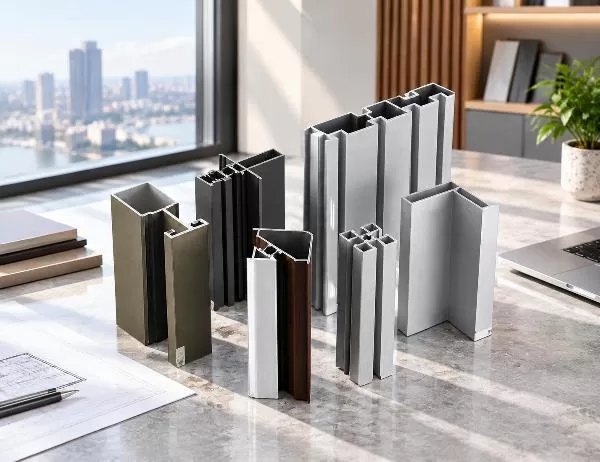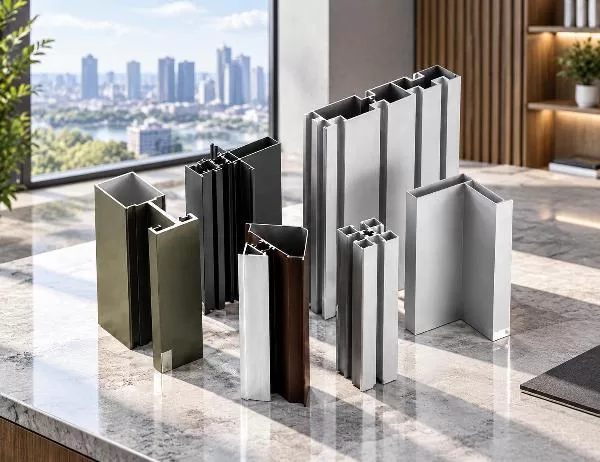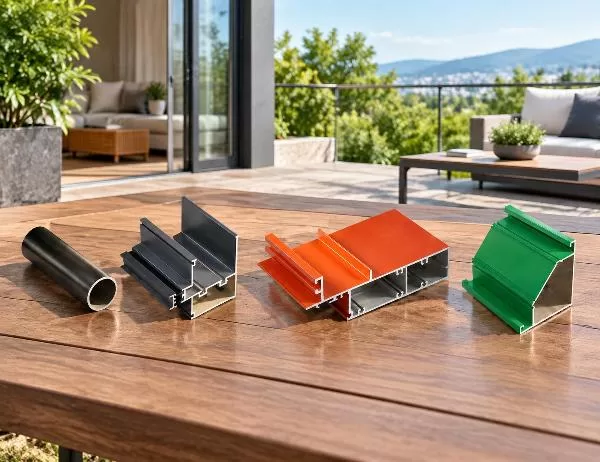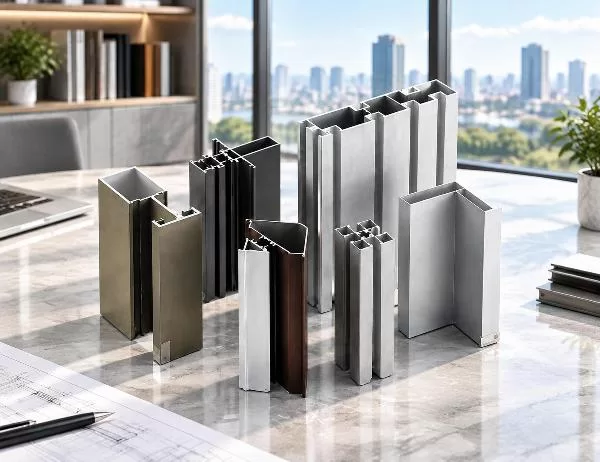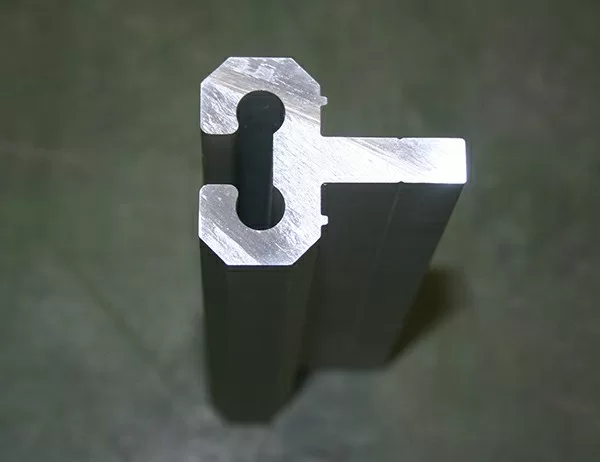
Specifying aluminium window & door profiles sounds simple until you’re staring at a spec sheet full of alloy codes and temper grades. Most buyers just want frames that won’t warp, won’t fail an inspection, and won’t need replacing in five years. Getting there means understanding a handful of decisions that actually matter, not the marketing language wrapped around them.
Wood swells. PVC sags under heat. Steel rusts if the coating chips. Aluminium sidesteps all three problems because it forms a stable oxide layer on its surface almost immediately after extrusion, which is why untreated aluminium doesn’t corrode the way raw steel does.
That native resistance is also why aluminium window & door profiles dominate commercial construction. A frame that holds its shape under wind load, doesn’t rot near coastal humidity, and accepts almost any finish gives architects fewer constraints to design around. The tradeoff is thermal conductivity, which is a separate problem with its own separate fix, covered further down.
Not every aluminium alloy belongs in a window frame. The 1000 series is nearly pure aluminium, soft and better suited to electrical conductors than structural members. The 7000 series brings zinc into the mix for aerospace-grade strength, but it’s overkill and expensive for a door frame that just needs to hold glass steady.
The 6000 series sits in the middle, and within it, 6063-T5 has become something close to an industry default for extruded window and door sections. It extrudes cleanly into the intricate multi-chamber shapes that window systems require, holds tight dimensional tolerances, and still delivers enough mechanical strength for standard residential and commercial openings.
Here’s how the alloy families generally compare for this application:
| Alloy Series | Typical Strength | Extrudability | Common Use |
|---|---|---|---|
| 1000 series | Low | Excellent | Electrical, decorative trim |
| 3000 series | Moderate | Good | General fabrication |
| 5000 series | Moderate-High | Fair | Marine, structural sheet |
| 6000 series (6063-T5) | Good | Excellent | Window & door frames, curtain wall |
| 7000 series | Very High | Poor | Aerospace, high-stress structural |
The temper designation matters as much as the alloy itself. T5 means the profile was cooled and artificially aged straight after extrusion, which locks in strength without a separate heat treatment step. T6 pushes that further with a full solution heat treatment for applications needing more load capacity, while H112 tempers are typically reserved for parts that see minimal cold working after forming.
A frame’s alloy determines what it can survive structurally. Its surface finish determines what it can survive environmentally, and this is where a lot of buyers underspend without realizing it.
Mill finish aluminium, straight off the extrusion press, has no added protective layer beyond its natural oxide film. It’s fine for indoor or short-term applications, but coastal air, industrial pollution, or heavy UV exposure will dull and pit it over time. Everything else on the market exists to slow that process down.
Choosing between these isn’t about picking the "best" one. A ground-floor residential window in a mild climate doesn’t need PVDF. A 40-story tower facing salt spray and decades of sun probably shouldn’t settle for basic powder coating.
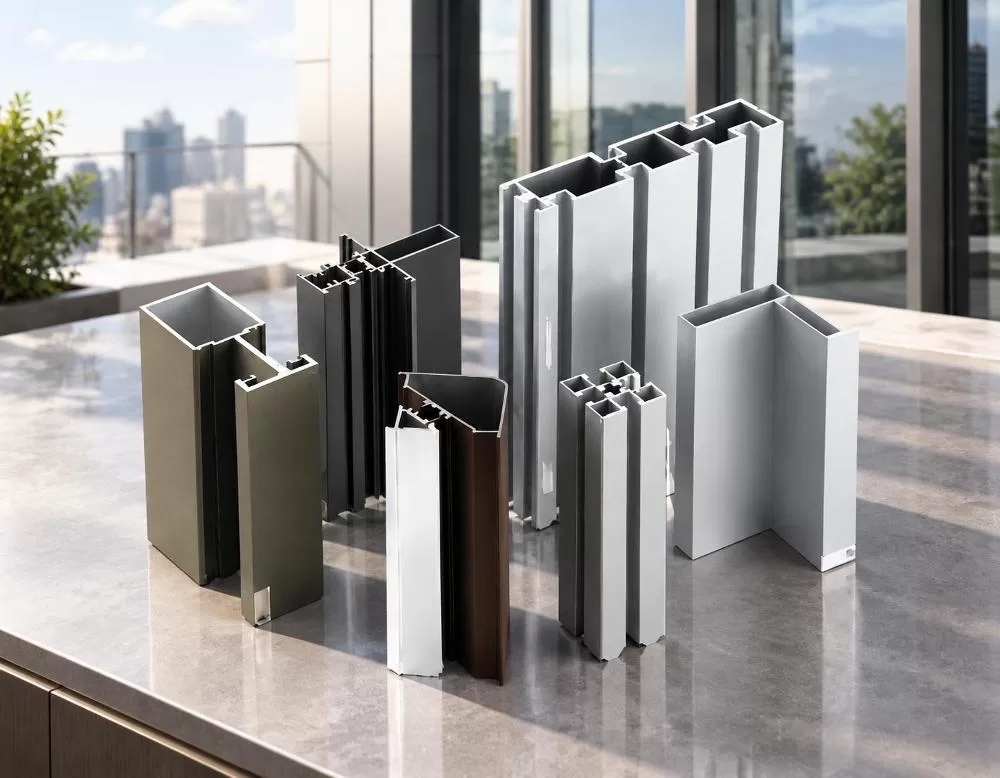
Aluminium’s biggest structural advantage doubles as its biggest thermal weakness. Metal conducts heat efficiently, which means a solid aluminium frame acts like a bridge carrying outdoor temperature straight into the room, and vice versa in summer.
Thermal break profiles interrupt that path. The design splits the frame into two aluminium sections joined by a strip of low-conductivity material, usually polyamide, so heat has to cross an insulating barrier instead of traveling through continuous metal. This single design change is largely responsible for aluminium frames becoming viable in cold climates where they’d otherwise lose the energy-efficiency argument to PVC or timber.
For buyers weighing energy codes or utility costs, thermal break and heat insulation profiles aren’t an upgrade to consider later. They’re often the deciding factor in whether an aluminium system meets local building energy requirements at all.
Window and door hardware, from multi-point locks to weatherstripping channels, is engineered to fit specific cross-sectional dimensions. A profile that’s off by even half a millimeter can leave hardware loose, gaps that let in drafts, or seals that never compress properly.
This is where extrusion equipment capacity becomes relevant to a buyer who will never set foot in a factory. Producing the complex, multi-void cross-sections that modern window systems use, hollow chambers for drainage, screw channels, gasket grooves, requires high-tonnage press equipment capable of holding tight tolerances across long production runs. According to Goldapple-Alu’s product documentation, its facilities use 5000T press machinery specifically to achieve this kind of dimensional consistency on complex architectural sections.
Beyond the extrusion itself, most projects need secondary processing before a profile becomes an installable frame component:
A supplier offering these deep-processing services in-house removes a coordination headache. Instead of shipping raw extrusions to three different shops, fabricators receive profiles that are closer to installation-ready.
Not every project needs the same specification, and overspecifying wastes money just as reliably as underspecifying causes failures. A rough decision path looks like this:
None of these categories are rigid. A fabricator working across multiple regions typically standardizes on two or three profile-and-finish combinations rather than customizing every job from scratch, which keeps procurement simpler without compromising performance where it counts.
Is anodized or powder-coated aluminium better for windows?
Neither is universally better. Anodizing produces a harder, more scratch-resistant surface with a more limited color range, while powder coating offers far more color options and a thicker protective layer but is comparatively more prone to chipping if impacted.
Do all aluminium window frames need a thermal break?
No. Thermal breaks matter most in climates with significant heating or cooling demand. Mild climates or non-conditioned spaces can often use standard aluminium sections without the added cost.
Why does 6063-T5 appear on so many spec sheets?
It balances extrudability, dimensional stability, and mechanical strength well enough to suit most standard window and door applications, which is why it has become a common reference point rather than a specialty alloy.
Can aluminium profiles be customized for non-standard openings?
Yes. Deep processing services like CNC machining, drilling, and welding allow standard extrusions to be adapted to custom dimensions and hardware requirements without redesigning the base profile.
Specifying aluminium window & door profiles ultimately comes down to matching three variables to the actual building: alloy strength, surface finish durability, and thermal performance. Skipping any one of them to save cost upfront tends to show up later as a maintenance bill or a failed energy audit.
For fabricators and architects sourcing at scale, working with a supplier that can produce tight-tolerance extrusions and handle the surface treatment and secondary processing in-house, as Goldapple-Alu Group does across its facility, simplifies a process that otherwise involves juggling several vendors. Whether the project calls for a straightforward residential frame or a large-scale curtain wall system, the right aluminium window & door profiles come down to specifying for the building’s actual climate and load conditions, not the longest feature list on a data sheet.